
Best Time to Visit Positano (Weather, Crowds & When to Go)
Positano looks good in photos year-round, but timing shapes the entire experience — from how busy it feels to what’s actually open. This guide breaks down the best time to visit Positano based on weather, crowds, prices, and what kind of trip you want — so you can pick the right months, not just the most popular ones.
I’ve visited Positano in different seasons, and this guide is designed to help you decide fast. Start with the at-a-glance section for the short answer, then use the sections below to fine-tune your plans depending on whether you care most about sunshine, space, or value.
If you’re choosing dates alongside accommodation, it helps to know where to stay in Positano before prices and availability start shifting.
This article may contain affiliate links. If you book through them, I may earn a small commission at no extra cost to you.
This guide is part of my Italy Travel Guides Collection, which brings together what to see, where to go, and how to plan your time.
When Is the Best Time to Visit Positano?
BEST TIME
May
☀️
Avg: 20–23°C (68–73°F)
Warm, lively, and one of the best months to visi
BEST TIME
September
☀️
Avg: 24–26°C (75–79°F)
Warm sea, fewer crowds, another top month
January
❄️
Avg: 10–12°C (50–54°F)
Quiet, cool, and largely shut down
February
🌤️
Avg: 11–13°C (52–55°F)
Still quiet, a few early reopenings late month
March
🌤️
Avg: 13–15°C (55–59°F)
Mild days, limited services, spring starting to show
April
🌤️
Avg: 16–18°C (61–64°F)
Pleasant weather, town slowly waking up
June
☀️
Avg: 24–27°C (75–81°F)
Hot, busy, and ideal for boats and beaches
July
☀️🔥
Avg: 27–30°C (81–86°F)
Very hot, peak crowds, peak prices
August
☀️🔥
Avg: 27–30°C (81–86°F)
Intense heat, packed ferries, busiest month
October
🌤️
Avg: 20–22°C (68–72°F)
Mild, calmer, gradual seasonal slowdown
November
🌧️
Avg: 15–18°C (59–64°F)
Quieter, wetter, many hotels begin closing
December
☁️🌧
Avg: 11–13°C (52–55°F)
Very quiet, limited ferries and restaurants
Best Time to Visit Positano at a Glance
- Best overall time: May & September – warm, sunny days without peak-summer chaos
- Best for good weather: June & early September – long days and reliable sunshine
- Best for fewer crowds: Late April, early May & October – calmer streets and easier bookings
- Best for swimming & boat trips: June to September – sea temperatures are at their best
- Worst time to visit: January to early March – many hotels, restaurants, and ferries shut down
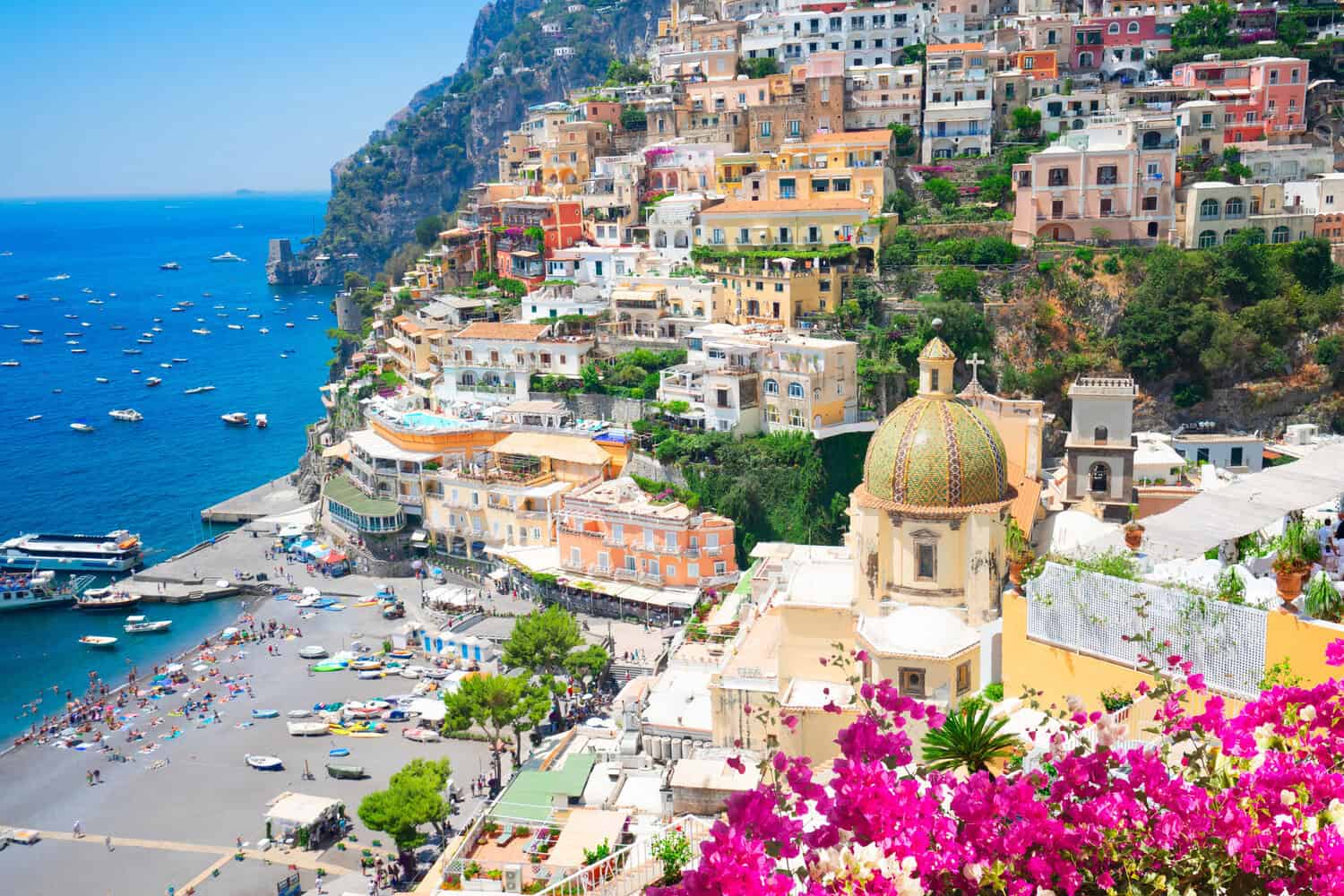
Best Time to Visit Positano by Travel Style
First-time visitors:
May or September. These months show Positano at its best without peak-summer intensity. Everything is open, the weather is reliable, and it’s much easier to enjoy the town without constant crowds.
Outdoor walking & exploring:
April, early May, and October. Cooler temperatures make Positano’s steep streets and staircases far more manageable, and the town feels calmer overall.
Beach time & boat trips:
June to early September. This is when the sea is warm enough for swimming and boat trips run frequently, though July and August are the busiest.
Budget travel:
Late April, early May, and October. Prices are lower than peak summer, availability improves, and the town is still fully functioning. Winter is cheaper but comes with widespread closures.
Short stays & day trips:
May, June, or September. These months make it easier to fit Positano into a wider itinerary without losing time to heat, crowds, or limited transport.
Peak vs Shoulder vs Low Season in Positano
Peak Season (June–August)
Hot, busy, and at full throttle. Everything is open, the sea is perfect for boat trips, and Positano looks exactly like the postcards — but crowds are heavy and prices are at their highest. Book ferries, hotels, and restaurants well ahead.
Shoulder Season (April–May & September–October)
The sweet spot. Warm days, fewer crowds, and a more relaxed pace without losing atmosphere. Most hotels and restaurants are open, boats are running, and it’s much easier to enjoy Positano without constant queues.
Low Season (November–March)
Quiet and slow, with many hotels, beach clubs, and restaurants closed. Ferry schedules are limited and weather is less predictable. Best for a low-key visit, not ideal if Positano is the main event of your trip.
Quick Travel Logistics for Positano
- Peak season (June–August): Expect full ferries, busy roads, and higher prices across the board. Hotels and restaurants book up months ahead, especially those with sea views. Boat schedules are frequent, but queues and sold-out sailings are common by mid-morning.
- Shoulder season (April–May & September–October):The easiest time to plan a trip. Transport runs reliably, most hotels and restaurants are open, and it’s much easier to be spontaneous with bookings. September and early October still feel summery without the peak-season pressure.
- Low season (November–March): Many hotels, beach clubs, and restaurants close for winter, particularly from January to early March. Ferry services are reduced and can be cancelled in rough weather. Positano works best as a short stop rather than a base at this time of year.
- School holidays: July, August, and Easter bring a noticeable spike in crowds and prices, especially with Italian and European school breaks. August is the busiest month of all, with domestic travel adding to international tourism.
- Major annual events: Summer festivals and religious celebrations take place between June and September, adding atmosphere but also increasing demand. Outside of summer, events are limited and the town is much quieter.
- Typical temperatures: Spring and autumn are warm and comfortable for walking. Summer is hot and intense, especially on steep streets. Winter is mild compared to northern Europe but often damp.
- Daylight: Long summer evenings are ideal for boat trips and sunset dinners. In winter, shorter days and earlier closures make sightseeing more limited.

Best Time to Visit Positano for Good Weather
If weather is your top priority, late spring to early autumn is when Positano really delivers. Days are bright and dry, evenings stay warm, and you can plan without constantly checking the forecast.
Late May to June is one of the most reliable windows. Temperatures are warm but not stifling, rainfall is low, and the town feels fully alive without the intensity of high summer. It’s comfortable for walking up and down Positano’s steep streets, with plenty of long, sunny days.
July and August bring guaranteed sunshine, but also serious heat. Midday sightseeing can feel draining, especially on exposed staircases, and the town is at its busiest. This is the best time for swimming and boat trips, but less forgiving if you plan to explore on foot.
September is a great month. The sea is still warm, days are sunny and slightly cooler, and the overall pace is calmer. It’s often the best balance of summer weather without summer stress.
Spring shoulder months like April and early May are pleasant but less predictable. You’ll get plenty of sunshine, though cooler evenings and the odd rainy day are still possible, especially earlier in April.
If good weather is your main concern, late May, June, and September are the safest and most comfortable months to visit.
Best Time to Visit Positano to Avoid Crowds
Crowds in Positano aren’t just about the time of year — they’re also driven by day-trippers, cruise traffic, and limited space. In peak summer, the town can feel overwhelmed by late morning, especially around the beach and main walking routes.
July and August are the most intense. This is when international tourism overlaps with Italian school holidays, and Positano runs at full capacity. Streets are busiest from late morning through early evening, ferries sell out quickly, and popular viewpoints are rarely quiet.
The calmest months are late April, early May, and October. You still get pleasant weather, but the town feels noticeably easier to move around. Restaurants are less rushed, ferry queues are shorter, and you’re more likely to enjoy the beach or a coastal walk without feeling squeezed.
September sits in between. Early September can still feel busy, especially on weekends, but crowds thin out as the month goes on. By mid to late September, Positano regains much of its relaxed charm while staying firmly in summer mode.
If you’re visiting in busier months, timing matters. Early mornings and evenings are far calmer, and staying overnight rather than visiting on a day trip makes a huge difference to how the town feels.
Best bet:
For fewer crowds without losing atmosphere, aim for late April, early May, or October, with mid to late September as a strong second choice.
Best Time to Visit Positano on a Budget
Positano is never cheap, but some months are noticeably better value than others — especially once you factor in hotel prices, ferry costs, and how much you’ll realistically get out of your stay.
The most expensive period is July and August. Hotel rates peak, minimum stays are common, and popular places book out far in advance. You’ll also pay more for ferries, boat trips, and anything with a sea view. You’re paying top price for peak demand.
For better value without sacrificing the experience, look towards April, early May, late September, and October. Hotel prices soften, availability improves, and it’s easier to find good rooms without booking months ahead. Restaurants and transport are still running normally, so you’re not trading savings for inconvenience.
The cheapest months are November to March, but there’s a catch. Many hotels, beach clubs, and restaurants close for winter, and ferry services are limited. Prices are lower, but the overall experience is much quieter and less flexible — Positano works better as a short stop than a base at this time of year.
Flights into Naples also tend to be cheaper outside summer, especially in late autumn and early spring, which can make shoulder season trips particularly good value if you’re booking from Europe.
The bottom line:
Late April, early May, and October usually offer the best balance of lower prices and a town that’s still fully functioning.
Visiting Positano in Peak Season: How to Make It Work
If summer is the only time you can visit, Positano can still be brilliant — you just need to be a bit more strategic about how you plan your days.
Start early.
Positano is at its calmest before 9am. Early mornings are ideal for beach time, photography, or wandering the quieter upper streets before day-trippers arrive.
Plan around the heat.
July and August afternoons are intense, especially on staircases and exposed paths. This is the best time for boat trips, swimming, or a long lunch somewhere shaded rather than sightseeing on foot.
Book ahead — properly.
Accommodation, ferries, and popular restaurants should be locked in well in advance. Sea-view rooms, weekend ferry routes, and sunset dining spots are usually the first to sell out.
Stay overnight if you can.
Positano feels very different once day-trippers leave. Evenings are calmer, and early mornings give you a glimpse of the town before it fills up again.
Choose your base carefully.
If central Positano feels overwhelming in summer, consider quieter edges of town or nearby villages for overnight stays, then visit Positano early or late in the day.
With the right timing and expectations, peak season can still deliver those classic Positano moments — just without trying to do everything at once.
Best Time to Visit Positano for Festivals & Events
Positano isn’t a big festival town, but a few key dates can shape the atmosphere — and your planning — if you’re visiting in summer.
Ferragosto (15 August)
Italy’s biggest summer holiday. Beaches, ferries, and restaurants are packed, and prices are at their highest. It’s lively and very Italian, but not ideal if you’re hoping for breathing space.
Feast of Santa Maria Assunta (mid-August)
Positano’s main religious celebration, marked with processions, music, and fireworks. It adds colour and local character, but also draws extra visitors during an already busy month.
Summer music and cultural events (June–September)
Small-scale concerts and cultural evenings take place through the summer, often outdoors. These don’t usually require advance planning but add to the evening buzz, especially in July and August.
Outside of summer, events are limited. Spring and autumn visits are quieter and more focused on the landscape, food, and pace of life rather than festivals.
The bottom line:
If events matter to you, August offers the most atmosphere — just expect crowds. For a calmer trip, June and September still feel lively without being dominated by festival traffic.

Month-by-Month Guide to Visiting Positano
January
Cold by coastal Italy standards and very quiet. Many hotels, restaurants, and beach clubs are closed, and ferry services are limited. Positano feels more like a small village than a resort town.
February
Still firmly low season, with similar closures to January. Days are a touch longer and milder, but this is not a month for sightseeing-heavy itineraries or boat trips.
March
Early signs of spring start to appear, though services remain limited. You’ll get mild days and fewer crowds, but Positano is still waking up slowly and doesn’t yet feel fully open.
April
A turning point. The weather improves, flowers bloom, and more hotels and restaurants reopen. It’s a pleasant time for walking and exploring, though sea temperatures are still cool and ferry schedules can be lighter early in the month.
May
One of the best months to visit. Warm, sunny days, manageable crowds, and a lively but relaxed feel. Everything is up and running, and it’s ideal for sightseeing, dining, and early-season boat trips.
June
Summer arrives properly. Long, bright days and excellent conditions for beaches and boats, but with rising visitor numbers. Busy without being overwhelming — especially compared to July and August.
July
Peak summer heat and peak crowds. Positano is vibrant and energetic, but sightseeing is best done early or late in the day. Expect packed ferries, high prices, and little spontaneity.
August
The busiest and most intense month. Italian school holidays and Ferragosto bring maximum crowds and demand. Great for swimming and nightlife, less ideal for relaxed wandering or last-minute plans.
September
A standout month. The sea stays warm, temperatures ease slightly, and crowds thin as the month goes on. Positano feels calmer but still very much in summer mode.
October
Mild, quieter, and more laid-back. Early October is still excellent for visiting, while later in the month sees gradual closures and fewer ferry services. A good option if you prefer space over buzz.
November
A clear slowdown. Cooler, wetter weather becomes more common, and many seasonal businesses close. Positano works better as a brief stop than a base.
December
Very quiet, with limited accommodation and dining options. Festive touches appear, but this is a low-key, local-feeling month rather than a classic Positano experience.
Worst Time to Visit Positano
There isn’t a single month that’s completely off-limits, but some periods are far less rewarding than others — especially if Positano is the main focus of your trip.
January to early March is the weakest window. Many hotels, restaurants, and beach clubs close for winter, ferry services are limited, and rough seas can disrupt travel plans. The town feels quiet to the point of inactivity, which isn’t ideal if you’re visiting for scenery, food, or coastal life.
August can also be a tough experience for a different reason. Extreme heat, Italian school holidays, and Ferragosto combine to create peak crowds and peak prices. Positano is lively and energetic, but it’s hard to move around comfortably, and spontaneity is almost impossible.
Late November and early December sit somewhere in between. The town is quieter and atmospheric, but weather becomes less predictable and seasonal closures reduce your options.
If Positano is part of a longer southern Italy itinerary, winter months can still work as a brief stop. If it’s the highlight of your trip, late spring or early autumn delivers a far better experience.
So, When Should You Visit Positano?
First-timers:
May or September — warm, lively, and far less intense than peak summer.
Sightseers:
Late April, May, or October — comfortable temperatures and space to move.
Food-focused trips:
May, June, or September — menus are at full strength without August pressure.
Slow travel:
October — calmer streets, easier reservations, and a gentler pace.
Budget travellers:
Late April, early May, or October — better value without sacrificing the experience.
After visiting in different seasons, I’d personally choose September for warm seas, easier days, and a calmer version of Positano that still feels unmistakably summer.
Once you’ve settled on timing, this edit of stylish places to stay in Positano is a good next step.
Planning the Rest of Your Amalfi Coast Trip
If you’re planning the rest of your route, these guides help you plan what comes next:
- Boutique Hotels in Positano: 15 Stylish Stays on the Amalfi Coast – Design-led hotels with views, personality and the best locations in town.
- Best Time to Visit Positano (Weather, Crowds & When to Go)– When Positano feels magical — and when it feels uncomfortably busy.
- Luxury Hotels in Positano: Exceptional Places to Stay on the Amalfi Coast – A tight edit of Positano’s most assured luxury hotels
- Where to Stay in Positano: Best Hotels, Views & Neighbourhoods– Your roadmap to Positano’s prettiest perches — from postcard-perfect clifftops to tucked-away stays with jaw-dropping views.
- Epic Things to Do in Positano: The Ultimate Guide to Italy’s Amalfi Coast Gem – What’s actually worth doing in Positano, from viewpoints to beaches and boat trips
- Boutique Hotels in Amalfi: Small, Gorgeous Places to Stay – Characterful bases in Amalfi town, ideal for ferry connections and easy exploring.
- Boutique Hotels on the Amalfi Coast: Where to Stay by Town – A town-by-town edit of the Amalfi Coast’s best small hotels — so you can choose the right base without overthinking it.
- Luxury Amalfi Coast Itinerary: How to Plan the Dreamiest Italy Trip – A polished, multi-day route that balances scenery, stays and travel time.
- Day Trips from Sorrento: Capri, Pompeii & Amalfi Coast Adventures – The best places to visit from Sorrento, with realistic timings and transport tips.
- Things to Do in Sorrento (And What I’d Skip) –Clifftop views, lemon groves, boat trips, and just enough chaos to keep things interesting — this is Sorrento at its best.
- Boutique Hotels in Sorrento– Hand-picked small hotels with personality — from sea-view terraces to design-forward hideaways that feel like a local secret.
- Sorrento vs Positano (Where to Base Yourself on the Amalfi Coast) – Practical differences that matter once you’re there.
- How to Get from Rome to the Amalfi Coast- Trains, ferries, and the smartest routes to Positano, Amalfi, and Sorrento — without wasting a single holiday hour.
- More guides for : Naples, Positano, Sorrento,Amalfi town, Ravello and the Amalfi Coast
FAQs: Best Time to Visit Positano
What is the best month to visit Positano?
September is often the best all-round month, balancing warm weather with fewer crowds.
Is August a good time to visit Positano?
Only if you’re comfortable with heat, crowds, and high prices. It’s lively, but intense.
What is the cheapest month to visit Positano?
Winter months are cheapest, but many hotels and ferries close. Shoulder season offers better value overall.
When should you avoid visiting Positano?
January to early March for closures, and August if crowds and heat aren’t your thing.
How many days do you need in Positano?
Two to three nights works well, especially if you stay overnight rather than day-tripping.
Positano doesn’t need a long stay to make an impression. Get the timing right and even a short visit feels worth while — colourful streets, sea views, and just enough time to soak it all in without rushing. Plan around crowds and heat, keep expectations realistic, and Positano delivers exactly what it’s good at, without the stress that comes from trying to do too much.
🌿Explore Italy
Fallen for Italy? Places worth the flight — and every plate of pasta.— from art-filled cities to sun-soaked coastlines.
- Venice – Canals, historic neighbourhoods, and a city best explored on foot.
- Amalfi Coast – Colourful villages, cliffside views, and limoncello sunsets.
- Rome – Ancient ruins, hidden trattorias, and unforgettable gelato.
- Tuscany – Vineyards, hill towns, and golden countryside drives.
- Florence – Renaissance art, rooftop views, and perfect pasta.
- Naples – Ancient streets, world-famous pizza, and vibrant local life.
- Bologna – Italy’s food capital — mortadella, tagliatelle, and endless flavour.
🌿 Travelling beyond Italy
Looking for inspiration beyond Italy? Browse more destinations and food-focused guides from across the blog.
- Destination Guides – Cities, regions, and trip ideas across Europe and beyond.
- Food & Drink – What to eat, local specialities, and market-led guides.
Need a reminder? Pin It!


