
Sorrento vs Positano: An Honest Comparison from Someone Who’s Stayed in Both
Choosing between Sorrento and Positano looks simple on paper, but the two towns work very differently once you’re actually there. Where you base yourself affects everything from transport and budgets to how much energy your days require.
I’ve stayed in both and used both as bases on different trips, and they work in completely different ways. This guide isn’t about which town photographs better. It’s about transport, hotels, day trips, cost, crowds and how your days actually play out once you’re there. Skim the parts that matter to you, and you’ll know quickly which one fits the way you travel.
This article may contain affiliate links. If you book through them, I may earn a small commission at no extra cost to you.
This guide forms part of my Amalfi Coast Travel Guide, where you’ll find tips on where to stay, what to do and how to plan your trip. You can also explore the wider Italy Travel Guide for more destinations across the country.

2. Sorrento vs Positano: the short answer
If you just want the verdict without reading the whole guide, here it is.
Choose Sorrento if you want easy transport, better‑value hotels and the freedom to move around without planning your day around ferry timetables. It’s practical, well‑connected and far less effort day to day.
Choose Positano if you’re travelling slowly, prioritising views and atmosphere, and don’t mind paying more — and walking more — for the experience. It’s dramatic, beautiful and deliberately unhurried.
Neither is “better” in a general sense. One is better for how you travel. Most people choose based on photos, not logistics, and that’s where trips start to feel harder than they need to be.
➡️ If you’re still comparing all the towns, my guide to where to stay on the Amalfi Coast breaks down Positano, Sorrento, Amalfi and Ravello in more detail.
3. Accessibility & mobility: the bit most guides gloss over
This is one of the biggest real‑world differences between the two — and it’s rarely spelled out clearly.
Sorrento is the easier choice for anyone with mobility considerations.
The centre is mostly flat, pavements are sensible, and you can get around without tackling hills every time you leave your hotel. The lifts down to the bathing platforms take the sting out of beach access, taxis can actually reach most places, and you’re not constantly calculating how many steps stand between you and dinner.
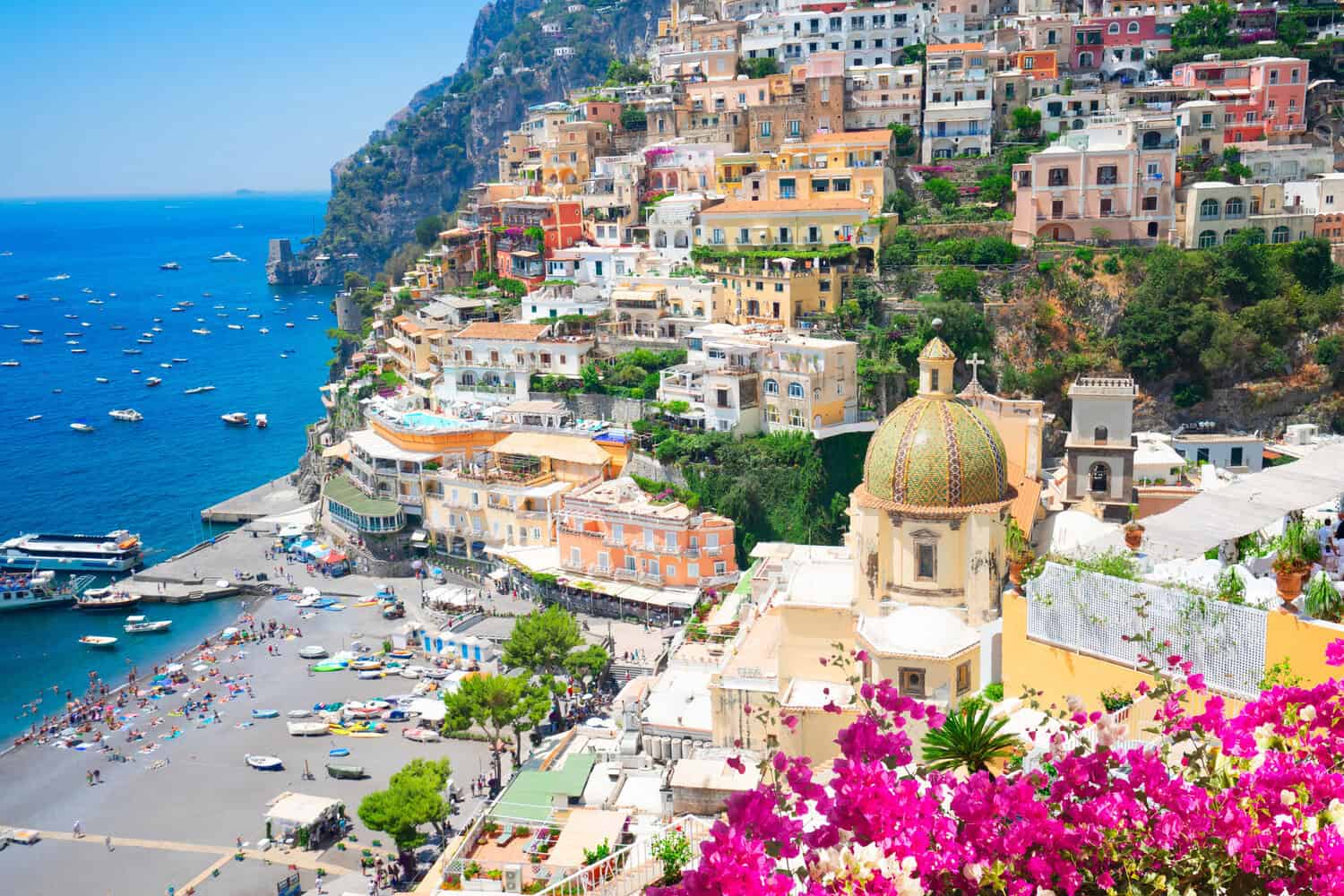
Positano is beautiful, but it’s vertical — and there’s no avoiding it.
Stairs, slopes, more stairs, more slopes. Even short walks involve elevation changes, and many hotels sit halfway up the cliff with no road access. Taxis are limited, buses get crowded, and even the “easy” routes still involve steps. If you’re travelling with heavy luggage, a pram, an injury, or just don’t fancy a daily leg workout, it’s something to take seriously.
In short:
- If mobility, comfort, or ease matter → Sorrento is far more forgiving.
- If you’re fully mobile and happy to climb for the views → Positano is worth the effort.
If Positano is the direction you’re leaning in, these guides help narrow things down properly ➡️ Where to stay on the Amalfi Coast without a car ➡️ Best time to visit Positano ➡️ Where to stay in Positano
4. Getting there & getting around
This is where the difference between Sorrento and Positano becomes obvious within about 24 hours.
Sorrento is easy.
It has a direct train line from Naples, including the Circumvesuviana, which means you can arrive without juggling ferries or buses. The station is right in town, the centre is relatively flat, and once you’re there, getting around feels straightforward. Walking is realistic, taxis exist, and ferries to Capri and the Amalfi Coast run regularly from the marina.
Day trips from Sorrento are also simple. Pompeii, Herculaneum, Naples, Capri — they’re all well set up for independent travel. You don’t feel like every outing needs planning down to the minute.
Positano, on the other hand, makes you earn it.
There’s no train station. You arrive by ferry or by bus, both of which are fine in theory and occasionally chaotic in practice. If you’re coming by road, expect traffic. If you’re arriving by ferry, expect steps. Lots of them, with luggage.
Once you’re there, moving around Positano is vertical. Everything involves stairs, slopes, or both. Walking is part of the deal, taxis are limited and expensive, and buses can be crowded, especially in high season. It’s manageable — people do it every day — but it’s not effortless.
If smooth logistics matter to you, Sorrento wins comfortably. If you’re happy to slow down, plan around ferry timetables, and accept that some days will involve a lot of steps, Positano delivers the payoff in views and atmosphere.
For short trips or first visits, that ease really counts. For longer, slower stays, the extra effort in Positano can feel worth it.
If you’re relying on ferries between Sorrento, Positano and Capri, booking ahead makes life much easier in high season — especially once weekend sailings start filling up.
If you’re staying in Positano, check how far your hotel is from the nearest road — some properties involve long staircases, and arriving with heavy luggage catches a lot of people out.

5. Hotels & value for money
This is where expectations and reality tend to part ways.
Sorrento is better value, full stop.
For the same budget, you generally get more space, better facilities, and a wider choice of genuinely comfortable hotels. Pools are common, rooms are bigger, and mid-range places feel like proper hotels rather than compromises. Even higher-end stays tend to offer better value for money, with larger terraces and more breathing room.
It’s also easier to find well-priced hotels that still feel central. You don’t need to obsess over location quite as much — if you’re staying near the centre or above the marina, you’re rarely far from anything important.
Positano is expensive, and very specific.
You’re paying for location and views first, everything else second. Rooms are often smaller, prices climb quickly in peak season, and even mid-range hotels can feel costly for what you get. A sea-view room can double the price overnight, and once you start adding terraces and balconies, costs rise fast.
That said, when Positano gets it right, it really gets it right. Waking up to layered cliffs and boats drifting across the water is the reason people put up with the price. You’re not paying for convenience — you’re paying for atmosphere.
If you want comfort, space, and value, Sorrento makes life easier. If you’re happy to trade space and budget for views and setting, Positano delivers something Sorrento simply can’t replicate.
If you’re set on views and atmosphere, this breakdown of where to stay in Positano helps narrow down the right base.
➡️Getting there takes a bit of planning—my guides to Rome to the Amalfi Coast and Naples to Sorrento explain the easiest routes.

6. Atmosphere & daily pace
Sorrento and Positano might be on the same stretch of coast, but they feel like completely different places once you settle in.
Sorrento feels like a real town.
Locals commute, shops open early, cafés are busy in the morning, and evenings feel lively without being overwhelming. It’s touristy, yes, but it’s also functional. You can grab a coffee without a queue, find a supermarket easily, and wander without constantly stopping for photos.
In the evenings, Sorrento stays busy but relaxed. There’s a sense that people are passing through on different schedules — day-trippers, longer-stay travellers, locals heading home — and it keeps the town moving.
Positano feels like a stage set.
In the best possible way, but still — it’s theatrical. Days revolve around light, views, and timing. Mornings start slowly, afternoons cluster around beaches and terraces, and evenings are all about sunset, dinner reservations, and dressing up a little. It’s not somewhere you rush around.
That intensity is part of the appeal. Positano encourages you to slow down, stay put, and accept that some days you won’t “do” much beyond soaking it in. It’s beautiful, but it’s also more inward-looking.
If you like variety, flexibility, and a place that feels lived-in, Sorrento fits easily. If you want the picture postcard version and don’t mind repeating the same beach or terrace, Positano feels special in a way few places do.
Sorrento stays lively into the evening, especially around the centre. Positano is quieter overall, but beach‑level hotels can pick up late‑night noise in peak season.
If Positano is still on your shortlist, this guide breaks down the areas and hotel locations that actually work best:➡️ Where to stay in Positano
7. Beaches
Let’s be honest: most people don’t come to this part of Italy for classic, towel-and-nothing-else beach days. That said, where you’re based does change how easy — or appealing — beach time actually is.
Positano has the prettier beaches.
There’s no way around that. The main beach, Marina Grande, is dramatic and lively, backed by cafés and umbrellas with the town stacked behind it. It’s busy, photogenic, and very much part of the Positano experience. For something calmer, Fornillo is the better option — smaller, quieter, and a bit more relaxed once you walk over.
The trade-off is space and cost. Beaches are compact, sunbeds fill up fast, and you’ll almost certainly be paying for them. It’s not grab-a-towel-and-go territory, but it does feel special when you settle in.
Sorrento beaches are more functional than beautiful.
You’re dealing mostly with bathing platforms rather than sandy stretches. They’re well organised and perfectly fine for swimming, but they don’t have the same visual drama. Think ladders into the water, loungers set over the sea, and a more practical setup overall.
The upside is ease. Getting in and out is simple, facilities are good, and you’re less likely to feel like the entire day needs to revolve around securing a spot.
If beach aesthetics matter to you, Positano wins. If you’re more interested in a quick swim between sightseeing or a low-effort beach afternoon, Sorrento does the job without fuss.
➡️ Sorrento is often the easiest base for exploring the region. My guide to things to do in Sorrento covers what to see and how to plan your time.

8. Seasonality: how each place feels at different times of year
Most people compare Sorrento and Positano as if they feel the same year‑round. They don’t. The season you’re travelling in can make one town far more appealing — or far more awkward — than the other.
Sorrento stays lively for more of the year.
Shops, restaurants and hotels stay open longer into autumn and reopen earlier in spring. Even in winter, it feels like a functioning town rather than a resort in hibernation. Ferries run more reliably in shoulder season, and you’re less likely to find yourself with limited dining options or reduced transport.
Positano is magical in shoulder season — but quieter.
April, May and October are gorgeous, but some hotels and restaurants won’t be open at the very start or end of the season. Ferry schedules thin out, buses run less frequently, and the town feels more relaxed but also more limited. In winter, Positano is extremely quiet, with many places closed entirely.
Summer amplifies the differences.
Sorrento handles crowds better thanks to its size and infrastructure. Positano is stunning in peak season, but it’s also at its most expensive, most crowded, and most dependent on ferry timetables — which can be disrupted by wind or rough seas.
In short:
- Spring & autumn: Sorrento = reliable; Positano = beautiful but quieter.
- Summer: Sorrento = manageable; Positano = peak drama and peak crowds.
- Winter: Sorrento = still a town; Positano = semi‑asleep.
➡️ If you’re leaning towards Positano, my guide to the best time to visit Positano breaks down weather, crowds and ferry schedules month by month.
9. Ferries, weather & why it matters more in Positano
This is one of those practical details that can make or break a day — and it affects the two towns very differently.
Sorrento’s transport is far more weather‑proof.
Ferries run regularly in season, but if the sea gets choppy or sailings are cancelled, you still have trains, buses and taxis to fall back on. It’s rare to feel stuck or forced to change plans completely.
Positano relies heavily on ferries — and ferries rely on calm seas.
Windy days can cancel or delay services with little warning, especially in spring and autumn. When that happens, your options shrink fast: buses get crowded, taxis are expensive, and journeys that should be simple suddenly take twice as long. If you’re planning day trips, it’s something to factor in.
In short:
- Sorrento = multiple backup options
- Positano = ferry‑first, weather‑dependent
➡️ If you’re travelling outside peak summer, this matters more than people expect.
✅ Ferries between Sorrento, Positano and Capri are popular and can sell out in high season. Booking ahead keeps your plans flexible and stops you from building your day around whatever’s left.
10. Day trips & base value
This is where the decision really starts to crystallise.
Sorrento works brilliantly as a base.
From here, day trips are genuinely easy. Pompeii and Herculaneum are straightforward by train. Naples is an easy hop. Capri ferries run frequently, and organised tours are plentiful if you don’t want to plan everything yourself. Even hopping along the Amalfi Coast feels manageable when you’re starting somewhere well connected.
You also don’t feel locked in. If the weather changes or plans shift, you’ve got options — and that flexibility takes a lot of pressure off your itinerary.
Positano works best when it’s the destination, not the hub.
Day trips are possible, but they take more effort. Ferries are the most pleasant way to move around, but they’re weather-dependent and timetable-driven. Buses can be crowded, and driving isn’t for the faint-hearted. Visiting nearby towns feels more deliberate and less spontaneous.
That’s not a problem if you’re happy staying put, revisiting the same beach, or building your days around one main plan. It’s just not ideal if you want to cover a lot of ground.
If you’re planning multiple day trips or want maximum flexibility, Sorrento is the stronger base. If you’re treating your accommodation as part of the experience and don’t mind a slower pace, Positano makes sense.
If day trips are a major part of your plans, this guide compares the easiest Amalfi Coast bases in more detail: ➡️ Where to stay on the Amalfi Coast

11. Food, restaurants & prices
Food is good in both places, but the experience — and the bill — feel very different once you’re actually there.
Sorrento is easier, more flexible, and noticeably better value.
You can eat well without organising your evening around reservations or sea views. There’s a wide mix of trattorias, pizzerias, seafood spots, late-night gelato counters, and casual places where you can stop spontaneously and still have an excellent meal. Prices soften quickly once you move a few streets back from Piazza Tasso, and it’s far easier to keep costs under control without feeling like you’re compromising.
Positano is more about atmosphere.
Dinner here often comes with a terrace, sunset light, or a view over the beach, and the pricing reflects that immediately. Restaurants are more reservation-driven, menus are narrower, and even simple dishes cost more because of the setting. You’re paying as much for the experience around the meal as the food itself.
That doesn’t mean Positano isn’t worth it — some of the most memorable meals on the coast happen here — but it suits travellers who want dinner to feel like part of the occasion, not just something slotted into the day.
If long lunches and terrace dinners are part of the appeal, this guide rounds up the Positano restaurants actually worth booking ahead for: ➡️ Best restaurants in Positano

12. What suits you best?
If you’re still on the fence, this is usually the section that tips it one way or the other.
First-time Amalfi Coast visitors
Sorrento is the easier introduction. Transport is simpler, hotels offer better value, and you can see a lot without feeling rushed or boxed in. It’s a forgiving base if this is your first time navigating the region.
Couples and romantic trips
Positano tends to be all about romance. Sunset dinners, sea views from balconies, and a slower pace make it feel special straight away. If the accommodation itself is a big part of the experience, Positano delivers.
Short trips (2–3 nights)
Sorrento works better for short stays. You waste less time getting in and out, and it’s easier to fit in day trips without everything feeling compressed. Positano can feel like a lot of effort for a very short visit.
Longer stays
Positano comes into its own when you’re not trying to do too much. With more time, the slower rhythm makes sense, and repeating the same beach or restaurant stops feeling restrictive.
Budget-conscious travellers
Sorrento is noticeably more manageable. Hotels, meals, and transport all cost less on average, and it’s easier to control spending without sacrificing comfort.
If Sorrento is sounding like the better fit, this guide breaks down the best hotels worth focusing on first: ➡️ Best Boutique hotels in Sorrento

13. Who shouldn’t stay in each place?
Most guides tell you who each town is “perfect for”. It’s often more useful to be clear about who will struggle.
Sorrento isn’t ideal if…
- You want that classic, cliffside Amalfi Coast drama every time you step outside
- You’re picturing a romantic, cinematic stay with sea‑view terraces and winding lanes
- You prefer boutique hotels over larger, more traditional properties
- You want to feel fully “in” the Amalfi Coast rather than on the edge of it
Sorrento is brilliant for convenience — but it’s not the postcard fantasy.
Positano isn’t ideal if…
- You hate stairs, steep walks, or relying on ferries and buses
- You’re on a tighter budget and don’t want to compromise on space or comfort
- You’ve got a packed itinerary and need easy day‑trip logistics
- You prefer a lived‑in town feel over a resort‑style, romantic bubble
Positano is magical — but it asks more of you than people expect.
In short:
If you want ease → Sorrento. If you want atmosphere and don’t mind effort → Positano.
14. How your days actually feel
It’s one thing to compare transport and hotels. It’s another to picture what your days look like once you’re there. This is the real difference most people only notice after they’ve booked.
A day in Sorrento
You wake up, wander to a café without thinking about hills or queues, grab a coffee and a pastry, and decide what you fancy doing. Maybe you hop on a train to Pompeii, maybe you stroll to the marina and catch a ferry to Capri, maybe you just wander the old town. Nothing needs planning to the minute. Dinner can be casual or last‑minute, and you never feel stuck or limited. It’s easy, flexible, and forgiving — the kind of place where you can change your mind halfway through the day and it doesn’t matter.
A day in Positano
You wake up to a view that makes you stop for a moment. Breakfast is slow, the light is good, and the day revolves around one main plan — the beach, a boat trip, a long lunch, a walk to Fornillo. You check ferry times, you factor in stairs, and you accept that everything takes a bit longer. Evenings are about timing: sunset, dinner reservations, the walk back up. It’s beautiful, deliberate, and unhurried — the kind of place where doing one thing well feels like enough.
In short:
Sorrento gives you freedom. Positano gives you focus.
15. Choosing Sorrento or Positano as a base
This is the bit most people wish they’d thought through earlier.
Best area for first-time visitors
Sorrento. It’s easier to reach, easier to move around, and better set up for independent travel. You can focus on enjoying the coast rather than constantly managing logistics.
Where I’d stay on a short trip
Again, Sorrento. The convenience adds up quickly when time is limited, and you’re less likely to feel like you’ve spent half your stay in transit or waiting around.
What I’d prioritise
I’d choose my stay based on how much I plan to move. If day trips are high on the list, Sorrento makes life simpler. If the goal is to slow down, stay put, and soak up the setting, Positano earns its place.
Common mistakes to avoid
Underestimating stairs in Positano is a big one — especially with luggage. Another is splitting a short stay between both towns and losing time to travel. On this part of the coast, fewer bases usually work better.
If you’re still narrowing down your base, these guides make the trade-offs much clearer: ➡️ Naples vs Amalfi Coast and ➡️ Where to stay on the Amalfi Coast without a car
16. Practical planning notes
Transport notes
Sorrento is the most straightforward place to arrive by train, especially from Naples. Positano relies on ferries or buses, both of which can be affected by weather and crowds in high season. If you’re travelling with heavy luggage or tight connections, this matters more than you think.
Booking tips
In Positano, room location and view make a big difference — and a big price jump. In Sorrento, you can save money by staying slightly outside the centre without losing much convenience. In both towns, booking early for summer travel helps lock in better options and avoids inflated last-minute prices.
If you’re leaning towards Positano, locking in the right stay early makes a real difference. This guide to boutique hotels on the Amalfi Coast highlights smaller, character-filled places that book up quickly, while checking the best time to visit Positano can help you avoid peak-season crowds and inflated prices. Once your base is sorted, this list of things to do in Positano helps you plan your days without overloading the itinerary.
🌿 Planning the Rest of Your Trip
Once the hotel is chosen, everything else becomes far easier to organise. Positano rewards good timing, realistic pacing, and a clear sense of what’s actually worth doing — these guides help you make those decisions without the usual noise.
Related Guides
Positano Guides
- Things to Do in Positano – Simple, relaxed ideas that don’t require a timetable.
- Best Time to Visit Positano – Weather, crowds, and the months that feel the most enjoyable.
- Sorrento vs Positano – How each town feels, who they suit, and the trade‑offs that make a difference.
- Boutique Hotels in Positano – Smaller, stylish stays with personality and charm.
- Luxury Hotels in Positano – The most exceptional places to stay, stunning sea views.
- Where to stay in Positano – the cliffside areas, hotel styles and rooms that actually justify the price — and the ones that don’t.
Amalfi Coast Guides
- Where to Stay on the Amalfi Coast (Beyond Positano) – the towns that give you better views, easier logistics and far better value — without feeling like a compromise.
- Boutique Hotels on the Amalfi Coast – Small, character filled stays with standout views, thoughtful design and a far more personal feel than the big-name resorts.
Nearby Destinations
17. FAQs: Sorrento vs Positano
Is it better to stay in Sorrento or Positano for the first time?
For most first-time visitors, Sorrento is the easier choice. Transport is simpler, hotels offer better value, and it works well as a base for day trips. Positano is stunning, but it asks more of you in terms of planning, cost, and walking.
Is Positano worth the extra cost?
It can be, if views, atmosphere, and a slower pace are your priorities. You’re paying for the setting as much as the stay. If comfort, space, and flexibility matter more, Sorrento usually feels like better value.
How many nights should you spend in Sorrento or Positano?
Sorrento works well for shorter stays of two to three nights, especially if you’re planning day trips. Positano suits longer stays, where you can slow down and avoid trying to do too much each day.
Can you visit Positano easily from Sorrento?
Yes. Ferries run regularly in season and make for an easy, scenic day trip. This is one of the reasons Sorrento works so well as a base — you can experience Positano without committing to staying there.
Which is better without a car?
Sorrento is more straightforward without a car thanks to trains and walkable areas. Positano is doable car-free, but involves more reliance on ferries, buses, and taxis, plus plenty of stairs.
Is it a good idea to split your stay between both?
Only if you have enough time. On short trips, splitting bases often means losing time to travel and check-ins. Many people find it easier to stay in Sorrento and visit Positano as a day trip instead.
The real difference between Sorrento and Positano isn’t beauty — it’s how much effort your trip requires.
Sorrento makes travel easier. It’s better connected, easier to navigate, and kinder on the budget, especially if you plan to explore beyond one town. Positano is more demanding, but it rewards you with atmosphere, views, and a slower, more immersive experience.
Sorrento and Positano suit completely different travel styles. One prioritises ease and flexibility; the other takes advantage of the atmosphere and setting. Once you know which matters more to you, the decision becomes much simpler.
🌿Explore Italy
Fallen for Italy? Places worth the flight — and every plate of pasta.— from art-filled cities to sun-soaked coastlines.
- Venice – Canals, historic neighbourhoods, and a city best explored on foot.
- Amalfi Coast – Colourful villages, cliffside views, and limoncello sunsets.
- Rome – Ancient ruins, hidden trattorias, and unforgettable gelato.
- Tuscany – Vineyards, hill towns, and golden countryside drives.
- Florence – Renaissance art, rooftop views, and perfect pasta.
- Naples – Ancient streets, world-famous pizza, and vibrant local life.
- Bologna – Italy’s food capital — mortadella, tagliatelle, and endless flavour.
🌿 Travelling beyond Italy
Looking for inspiration beyond Italy? Browse more destinations and food-focused guides from across the blog.
- Destination Guides – Cities, regions, and trip ideas across Europe and beyond.
- Food & Drink – What to eat, local specialities, and market-led guides.
Need a reminder? Pin It!


