
Best Time to Visit Florence (Weather, Crowds & When to Go)
The best time to visit Florence is spring or early autumn, when the weather is warm enough for long days exploring the historic centre without the intense heat of midsummer. Late April through early June and again from September into October are the most comfortable conditions for sightseeing, café terraces, and wandering Florence’s beautiful streets.
If you want the quick answer, start with the reference cards below. They show the best months to visit Florence depending on what matters most — the nicest weather, fewer crowds, or the lowest prices. After that, the guide breaks down how the seasons work and what each month is really like.
This article may contain affiliate links. If you book through them, I may earn a small commission at no extra cost to you.
If you’re planning a trip to Tuscany, this guide is part of my wider Florence Travel Guide, where you’ll find tips on what to see, where to stay, and how to plan your time in the city. You can also browse the full Italy Travel Guide for destination ideas, itineraries, and food-focused travel inspiration across the country.
Florence can feel magical one month and slightly exhausting the next. Visit in spring and you’ll spend long days drifting between piazzas, galleries, and gelato stops without thinking about the weather. Turn up in August and the same streets can feel like a slow-moving queue under a relentless sun. Timing matters here more than you might expect.
Best Time to Visit Florence at a Glance
If you want the short answer, these are the months that make Florence easiest and most enjoyable to visit.
BEST TIME
April – June
☀️
Warm spring weather
Perfect for sightseeing
BEST TIME
September – October
🌤
Warm days
Summer crowds easing
BEST MONTH
May
☀️
Warm but not too hot
Florence at its best
CHEAPEST
January – February
❄️
Lowest hotel prices
Much quieter city
Quick Answer: When to Visit Florence
- Best overall time: April to June and September to October – warm weather and comfortable conditions for sightseeing
- Best month to visit Florence: May – warm days without the intense summer heat
- Best for good weather: May and early June – sunny days and long daylight hours
- Best for fewer crowds: March and November – quieter streets and shorter museum queues
- Cheapest time to visit Florence: January and February – lowest hotel prices of the year
- Worst time to visit Florence: August – intense heat and peak tourism pressure
➡️ No matter when you visit, Florence is packed with things to see. My guide to 25 things to do in Florence covers the city’s highlights and experiences
How the Year Works in Florence
Florence doesn’t really drift through gentle seasons. It swings between beautiful, blistering, and briefly balanced.
Spring is the moment when everything clicks. By April the city is warm enough for long days on foot, and May often feels just right — bright skies, manageable crowds, and evenings that stretch late enough for aperitivo in a piazza.
Then summer arrives, and Florence turns into an oven. July and August regularly push past 30°C, and the stone streets trap the heat in a way that makes the historic centre feel far hotter than the numbers suggest. Sightseeing in the middle of the day becomes a slow shuffle between patches of shade.
By September, the edge comes off the heat, and the city becomes enjoyable again. October often feels calmer still — warm enough to sit outside, but without the pressure of peak summer tourism.
Winter is the reset button. Cooler days, shorter queues, and a version of Florence that feels a little less overwhelmed.
➡️ Autumn is harvest season, making it ideal for winery tours from Florence and exploring the Chianti region.

Best Time to Visit Florence by Travel Style
Different travellers want different things from Florence. The best month often depends less on the calendar and more on how you plan to spend your time in the city.
First-time visitors
May, June, and September usually give the easiest introduction to Florence. Days are long enough to visit the Duomo, Uffizi, and Accademia without rushing, and the weather is far easier to manage than the furnace of high summer. It’s also the kind of time of year when Florence invites you to linger — walking across the Arno at sunset, stopping for aperitivo in Piazza della Signoria, or climbing up to Piazzale Michelangelo for the classic view across the city.
Art lovers and museum-hopping
If your trip revolves around Florence’s galleries, April through early June and September through October work particularly well. Walking between museums is still comfortable, and queues are easier to manage if you arrive early in the morning. The Uffizi alone can absorb several hours, and the Accademia draws steady crowds around Michelangelo’s David, so visiting during cooler months makes moving between sights far easier.
Food-focused trips
Florence focuses on seasonal cooking, which makes October and November especially appealing for food-focused visits. Restaurant tables are easier to secure once the summer rush fades, and menus shift toward richer Tuscan dishes suited to cooler evenings. This is the time of year when trattorias feel a little more relaxed and relaxing over a long dinner with a bottle of Chianti makes perfect sense.
Wandering the city on foot
Florence is made for aimless wandering. Late spring — particularly May and early June — is ideal for drifting between piazzas, markets, and neighbourhood streets without worrying about the heat. You can spend hours crossing the Arno, climbing up to hilltop viewpoints, or losing yourself in the narrow lanes around Santo Spirito.
Budget travel
For lower prices and fewer tourists, January and February usually offer the best value. Hotel rates drop noticeably after the Christmas holidays, reservations are easier to secure, and the major museums are far calmer than they are later in the year. The weather is cooler, but Florence’s compact historic centre still works well for winter sightseeing.
➡️ Florence is also the gateway to Tuscany, and the best time to visit often depends on what you want to see in the surrounding countryside. My guide to the best places to visit in Tuscany highlights vineyards, hill towns and scenic spots.

➡️ Planning to visit the Uffizi? It’s worth comparing ticket options in advance. Timed-entry tickets often sell out during busy months, and guided or skip-the-line tickets can save a lot of waiting. See my guide to What to See at the Uffizi Gallery for the artworks to prioritise and how to choose the right ticket.
Cheat Sheet: Best Time to Visit Florence
- Peak season: Heavy pressure builds from late morning through mid-afternoon, especially around the Duomo, Uffizi Gallery, Ponte Vecchio, and Accademia. Central hotels fill quickly and restaurant reservations tighten. Book well ahead in May, June, and September if you want to stay in the historic centre.
- Shoulder season: Still busy but easier to manage. Early mornings and evenings are noticeably calmer, and visiting museums first thing in the day makes a huge difference. This is when Florence is generally at its most manageable.
- Low season: Fewer visitors and far more flexibility with hotels and dining. The historic centre feels calmer, and museums are far easier to enjoy without long queues. January and February are usually the quietest months.
- School holidays: Easter and July through August bring noticeable spikes in visitor numbers regardless of the weather.
- Day-trip pressure: Florence receives large numbers of organised day tours from across Tuscany. The historic centre is busiest from late morning through mid-afternoon, so staying overnight changes the experience significantly.
- Extreme heat: July and August regularly push above 30°C, which slows sightseeing dramatically during the middle of the day.
- Rain: Florence doesn’t have a strict rainy season, though November tends to have the most unsettled weather.
- Daylight: Summer evenings stretch past 9 pm, giving plenty of time to explore. Winter daylight is much shorter, which compresses sightseeing hours.
➡️ If you’re planning where to base yourself, see my guide to How Many Days in Florence to decide how long to stay.
Why Florence Feels Busier in the Middle of the Day
Florence receives huge numbers of day visitors arriving from across Tuscany and the cruise ports along the Ligurian coast. Many organised tours reach the city between 10am and midday, which is when the historic centre suddenly becomes much busier.
The areas around the Duomo, Ponte Vecchio, Piazza della Signoria, and the Uffizi feel this pressure most. Streets that seem manageable early in the morning can feel noticeably more crowded just a couple of hours later.
This is why it is far easier to enjoy Florence early in the day or later in the evening. Once the tour groups begin leaving in the late afternoon, the city often feels calmer again.
Florence weather by Month (Quick Snapshot)
- January — Cold but calm; the quietest time to see Florence’s museums.
- February — Still wintery, but manageable crowds and good hotel deals.
- March — Early spring begins; the city starts waking up again.
- April — Pleasant weather returns and visitor numbers begin climbing.
- May — One of the best months overall; warm days and long daylight.
- June — Hotter weather arrives and tourism builds quickly.
- July — Intense heat and heavy tourism across the historic centre.
- August — The toughest month for sightseeing; extreme heat and peak crowds.
- September — Excellent conditions again; one of the most popular months to visit.
- October — Mild temperatures and slightly calmer streets.
- November — Cooler, quieter, and good value on hotels.
- December — Festive lights and Christmas markets, but shorter days.
➡️ For an in-depth guide to the city’s main sights, neighbourhoods, and museums, see my Florence Travel Guide.
Visiting Florence in Peak Season: How to Make It Work
If July or August are your only options, a little planning helps enormously.
Start sightseeing early. The Duomo, Uffizi, and Accademia are far easier to visit first thing in the morning before the historic centre fills up.
Use the hottest part of the afternoon for long lunches, shaded cafés, or museums. Florence’s stone streets hold the heat, so stepping indoors makes the day far more manageable.
Evenings are the reward. As temperatures drop, the city becomes far more enjoyable, with people drifting between piazzas, restaurants, and gelato shops.
Peak season in Florence isn’t impossible — it just benefits from a bit of structure.
➡️ Summer is hot, so long lunches and lighter dishes become part of the experience — my guide to what to eat in Florence covers what to try.
Peak vs Shoulder vs Low Season in Florence
Florence doesn’t follow tidy tourism seasons. What matters more is a mix of heat, visitor numbers, and hotel demand, and those factors can change the feel of the city quite dramatically.
Peak Season (June–August)
This is when Florence comes under the most pressure. From late morning onward, the historic centre fills quickly, especially around the Duomo, Ponte Vecchio, and the Uffizi. By midday the main streets can feel like a slow-moving queue of tour groups, day-trippers, and cruise passengers arriving from the coast.
Florence also absorbs a huge number of day-trippers arriving on organised tours from across Tuscany and the cruise ports on the Ligurian coast. By late morning, the historic centre can feel far busier than it did just a couple of hours earlier.
Hotel prices are at their highest and the best restaurants book out days in advance. Tickets for major sights such as the Accademia and the Uffizi also need to be reserved ahead of time.
Then there’s the heat. July and August regularly push past 30°C, and the stone buildings trap it in a way that makes the city feel hotter than the forecast suggests. Sightseeing in the middle of the day often turns into a slow shuffle between patches of shade, churches, and gelato stops.
August can feel slightly different from the rest of summer. Some small family-run restaurants and neighbourhood shops close for their annual holidays, while many Florentines escape the city heat for the coast. The main sights and central restaurants stay open, but the city takes on a slightly more tourist-heavy feel.
Shoulder Season (April–May & September–October)
This is widely considered the best time to visit Florence, and it’s easy to see why. The weather is warm enough to spend long days outside, and the city feels energetic without quite tipping into the intensity of high summer.
The catch is that shoulder season is no longer a quiet secret. May and September are extremely popular months, particularly with international travellers and organised tours. Hotels fill quickly and prices remain strong, especially in the historic centre.
The advantage is comfort. Walking across the city between museums, markets, and piazzas is far more pleasant than during the peak of summer heat.
Low Season (November–February, excluding Christmas)
Florence breathes a little in winter. Visitor numbers drop noticeably after October, and January is often the quietest month of the year. Hotel prices soften, restaurant reservations become easier, and the big sights are far less hectic.
The trade-off is cooler weather and shorter daylight hours. Even so, Florence works well in winter because many of its highlights — churches, galleries, and museums — are indoors.
Without the pressure of peak tourism, the historic centre can feel calmer and easier to explore.
➡️ Spring is one of the best times for exploring the countryside, especially on day trips from Florence.

Festivals and Events That Affect When to Visit Florence
Florence’s calendar includes several major events that can influence crowds and hotel prices.
Scoppio del Carro (Easter)
One of Florence’s most famous traditions. A decorated cart is set off with fireworks in Piazza del Duomo on Easter Sunday. The spectacle attracts large crowds and accommodation fills quickly during the Easter weekend.
Calcio Storico (June)
A historic football tournament played in Piazza Santa Croce each June. The matches are part sport, part theatrical spectacle, and the final takes place on 24 June, Florence’s patron saint day.
Estate Fiorentina (Summer Festival)
During summer, the city hosts outdoor concerts, cinema screenings, and cultural events across Florence. Evenings can feel particularly lively during this period.
Christmas Markets (December)
The festive season brings lights, decorations, and Christmas markets to Florence’s historic centre, especially in Piazza Santa Croce.

🌿 Planning the Rest of Your Florence Trip
Florence is compact, intense, and easy to love — but once you’ve chosen your base and planned a few essentials, the city becomes much easier to move through.
Related Guides
Florence Essentials
- 25 Things to Do in Florence — Sights, food, views, and the classics done well.
- Where to Stay in Florence — Best areas and hotels for every type of trip.
- How Many Days in Florence – The honest answer.
- Best Time to Visit Florence – Weather, crowds, and when the city feels its best.
- Florence Travel Guide — A first‑timer’s overview: what to expect, how to plan, what to prioritise.
Food & Wine
- What to Eat in Florence — A food‑lover’s guide to local dishes.
- Best Food Tours in Florence — How to choose the right one.
- Winery Tours from Florence — Tuscan and Chianti experiences worth the trip.
Where to Stay
- Where to Stay in Florence — Choose the right base, not just a hotel.
- Boutique hotels in Florence — Stylish, unique places to stay.
Day Trips & Budget
- Day Trips from Florence — Wine, coastlines and Tuscan countryside.
- Free Things to Do in Florence — Big experiences, zero euros.
Art Lovers
- What to See at the Uffizi Gallery — A clear, focused guide to Florence’s art gem.
- More on Florence – Browse all Florence guides.
Looking beyond Florence?
- Tuscany – Hill towns, vineyards, coastlines, and slow‑travel favourites.
- More Destinations – Browse all city guides and travel inspiration.
.
So, When Should You Visit Florence?
If you want the easiest introduction to Florence, late spring and early autumn are hard to beat. May, early June, and September combine manageable temperatures with long daylight hours, which makes it far easier to move between museums, markets, and neighbourhoods without feeling rushed.
If avoiding crowds matters most, consider March or November. The city is noticeably calmer, hotel prices come down, and major sights such as the Uffizi and Accademia are far easier to enjoy without long queues.
If you are focused on value, January and February usually offer the best prices. Hotel rates drop after the Christmas holidays, reservations are easier to secure, and Florence’s compact centre still works well for winter sightseeing.
After visiting Florence several times, I’d choose May. The weather is warm enough for long days exploring the historic centre, but the intense summer heat hasn’t arrived yet, and the city still feels easier to navigate than it does later in the season.
🌿 Planning the Rest of Your Florence Trip
Florence is compact, intense, and easy to love — but once you’ve chosen your base and planned a few essentials, the city becomes much easier to move through.
Related Guides
Florence Essentials
- 25 Things to Do in Florence — Sights, food, views, and the classics done well.
- Where to Stay in Florence — Best areas and hotels for every type of trip.
- How Many Days in Florence – The honest answer.
- Best Time to Visit Florence – Weather, crowds, and when the city feels its best.
- Florence Travel Guide — A first‑timer’s overview: what to expect, how to plan, what to prioritise.
Food & Wine
- What to Eat in Florence — A food‑lover’s guide to local dishes.
- Best Food Tours in Florence — How to choose the right one.
- Winery Tours from Florence — Tuscan and Chianti experiences worth the trip.
Where to Stay
- Where to Stay in Florence — Choose the right base, not just a hotel.
- Boutique hotels in Florence — Stylish, unique places to stay.
Day Trips & Budget
- Day Trips from Florence — Wine, coastlines and Tuscan countryside.
- Free Things to Do in Florence — Big experiences, zero euros.
Art Lovers
- What to See at the Uffizi Gallery — A clear, focused guide to Florence’s art gem.
- More on Florence – Browse all Florence guides.
Looking beyond Florence?
- Tuscany – Hill towns, vineyards, coastlines, and slow‑travel favourites.
- More Destinations – Browse all city guides and travel inspiration.
.
FAQs: Best Time to Visit Florence
What is the best month to visit Florence?
May is widely considered the best month to visit Florence. The weather is warm enough for long days exploring the historic centre, but the intense summer heat hasn’t arrived yet. Daylight hours are long, outdoor cafés are busy, and the city feels energised without the extreme pressure of midsummer tourism.
Is August a good time to visit Florence?
August is usually the most challenging month to visit Florence. Temperatures often climb well above 30°C, and the historic centre becomes extremely crowded. Some small local businesses also close for the summer holidays, although major attractions and restaurants remain open.
What is the cheapest month to visit Florence?
January and February usually offer the lowest hotel prices. Visitor numbers drop after the Christmas holidays, which makes accommodation easier to find and museums far less crowded.
When should you avoid visiting Florence?
If heat and crowds are a concern, August is the most difficult month. Sightseeing during the middle of the day becomes tiring in the summer heat, and the historic centre can feel particularly congested.
How many days do you need in Florence?
Most travellers find two to three days enough to see Florence’s main highlights, including the Duomo, Uffizi Gallery, Accademia, and Ponte Vecchio. If you want time for museums, markets, and day trips into Tuscany, three days gives a much more relaxed pace.
Is spring a good time to visit Florence?
Yes, spring is one of the best times to visit Florence. April through early June brings mild temperatures and longer daylight hours, which makes it easier to explore the historic centre on foot. Visitor numbers begin increasing in May, but the weather is usually far more comfortable than during the peak summer heat.
Is winter a good time to visit Florence?
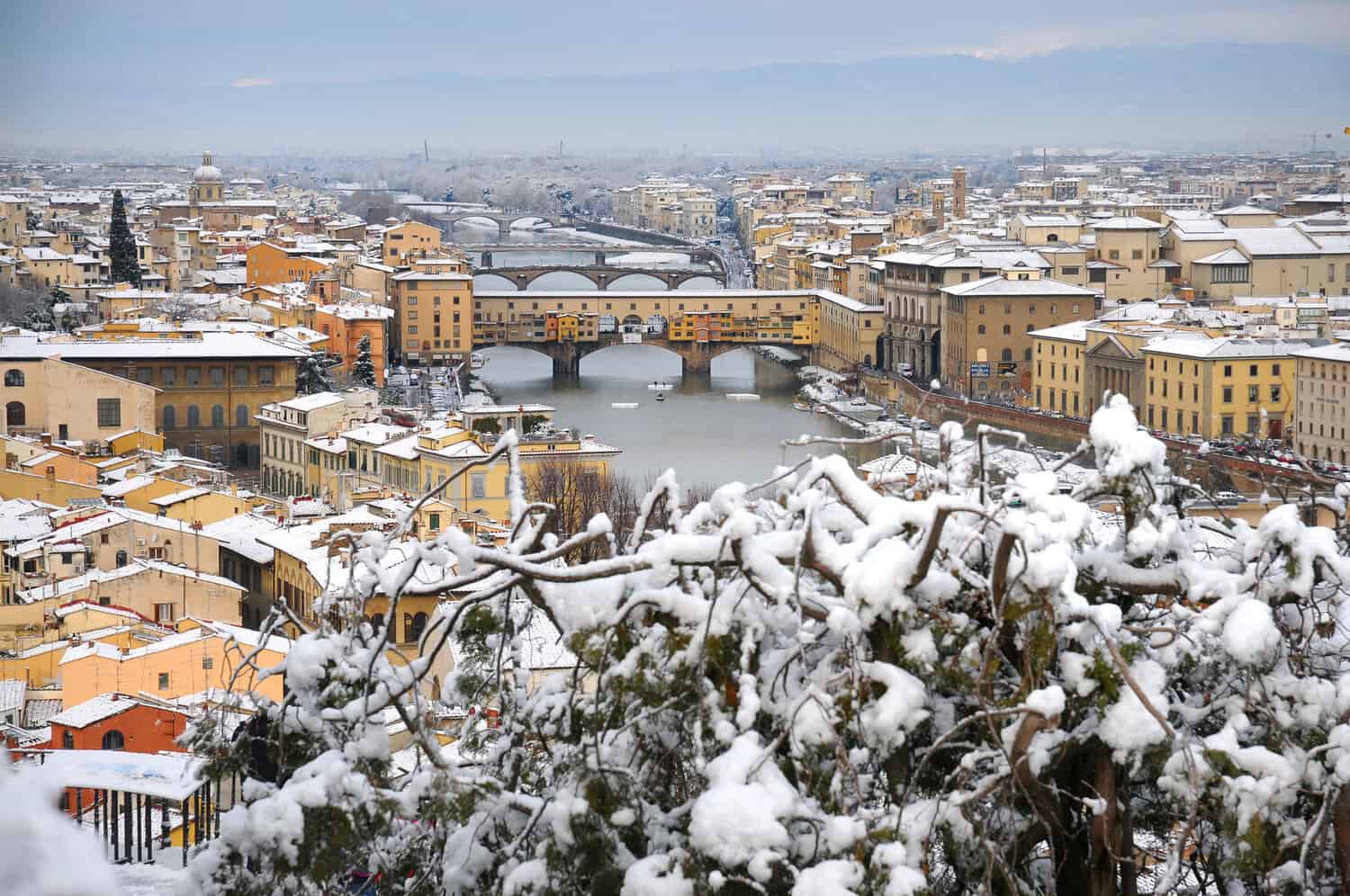
Winter can be a surprisingly good time to visit Florence. January and February are quieter months, hotel prices are lower, and major museums are far easier to visit without long queues. The trade-off is cooler weather and shorter daylight hours.
Florence doesn’t really change its beauty through the year, but the experience of the city shifts noticeably. Spring and early autumn make it easiest to spend long days walking between museums, markets, and neighbourhood streets. High summer demands more patience — and plenty of shade.
Choose your timing well and Florence becomes far easier to enjoy, whether you’re climbing the Duomo, crossing the Ponte Vecchio at sunset, or settling into a long dinner in a small trattoria.
🌿Explore Italy
Fallen for Italy? Places worth the flight — and every plate of pasta.— from art-filled cities to sun-soaked coastlines.
- Venice – Canals, historic neighbourhoods, and a city best explored on foot.
- Amalfi Coast – Colourful villages, cliffside views, and limoncello sunsets.
- Rome – Ancient ruins, hidden trattorias, and unforgettable gelato.
- Tuscany – Vineyards, hill towns, and golden countryside drives.
- Florence – Renaissance art, rooftop views, and perfect pasta.
- Naples – Ancient streets, world-famous pizza, and vibrant local life.
- Bologna – Italy’s food capital — mortadella, tagliatelle, and endless flavour.
🌿 Travelling beyond Italy
Looking for inspiration beyond Italy? Browse more destinations and food-focused guides from across the blog.
- Destination Guides – Cities, regions, and trip ideas across Europe and beyond.
- Food & Drink – What to eat, local specialities, and market-led guides.
Need a reminder? Pin It!


