


Best Things to Do in Positano, Italy
Positano looks effortless in photos, but the reality is that how you spend your time here matters more than almost anywhere else on the Amalfi Coast. This guide focuses on what’s genuinely worth doing in Positano, how to pace your days, and where to put your energy so the town feels magical rather than exhausting.
I’ve visited Positano more than once, in different seasons, and learned quickly that this isn’t a place you rush through or over-plan. Where you walk, when you stop, and how much you try to cram in shapes the entire experience. Use this guide to plan smarter days, then dive deeper into the linked posts if you want beaches, hotels, or logistics nailed down in detail.
This article may contain affiliate links. If you book through them, I may earn a small commission at no extra cost to you.
This article is part of my broader Italy Travel Guide Collection, where I cover cities, regions, food, and how to plan a trip without overthinking it.
Quick Picks: Positano at a Glance
- Don’t miss: Wandering the upper streets early morning, before day-trippers arrive
- Best beach to linger: Fornillo — calmer, easier, and more local
- Worth the splurge: A half-day boat trip along the coast
- Skip if short on time: Starting the Path of the Gods from Positano
- Best simple pleasure: A long lunch by the water
- Biggest mistake: Trying to see everything in one day
Quick Logistics You’ll Be Glad You Knew
- Positano is steep and entirely vertical — stairs are unavoidable
- Most exploring is on foot, with boats filling the gaps
- Early mornings and evenings are when the town feels its best
- Allow 1 full day minimum, 2–3 days ideal
- Boats, beach clubs, and transfers sell out quickly in summer
- Comfortable shoes matter more than outfits
- Staying overnight changes the feel of the town completely
For an in depth breakdown of seasons, crowds, and how the town feels month by month, Best Time to Visit Positano (Weather, Crowds & When to Go) is worth checking before you lock anything in.
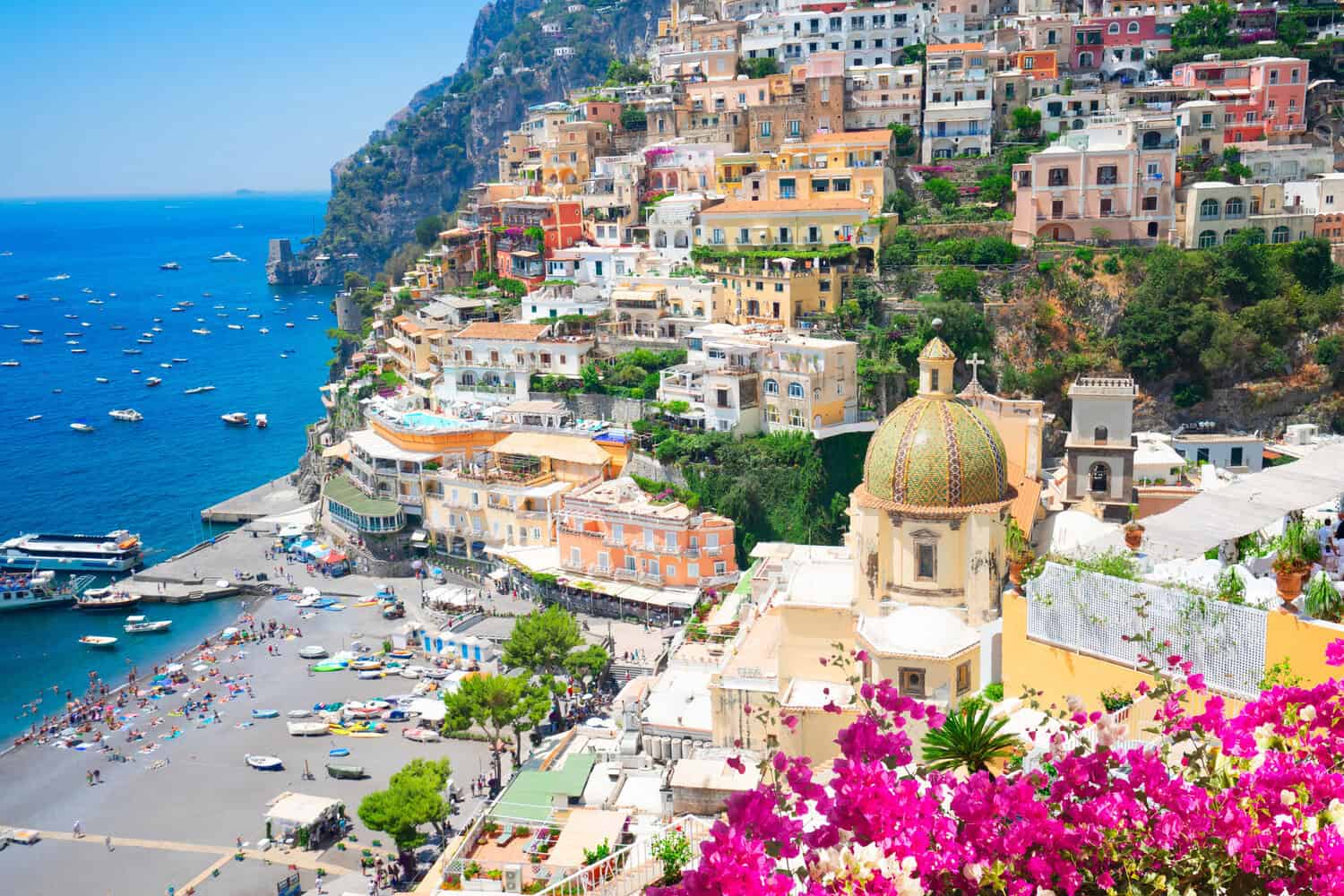
Wander Positano’s Streets (This Is the Real Experience)
The best thing to do in Positano isn’t a landmark — it’s walking. The town reveals itself gradually through staircases, tiled archways, shaded landings, linen shops, and sudden openings where the sea appears between buildings. This is where Positano’s character actually lives.
Timing matters more than route. Early morning is when the town still belongs to itself: delivery scooters buzzing past, cafés opening their doors, the heat still manageable. I usually start high up and drift downhill slowly, stopping for coffee or photos as the mood takes me. By late morning, the same streets feel tighter and more hectic, especially around the main road.
There’s no need to plan this part. Let yourself wander, double back, and take detours. Some of the most memorable moments in Positano happen when you stop trying to “see” it and simply move through it.
If you want a more structured overview of viewpoints, beaches, and highlights you can layer into this wandering.

Beaches in Positano: How to Choose the Right One
Positano’s beaches may all look similar at first glance — pebbled, dramatic, backed by cliffs — but they feel very different once you actually settle in. Choosing the right one isn’t about which is “best”, but how much effort you want to spend getting there and how long you plan to stay.
Spiaggia Grande is right at the bottom of town and carries the buzz that comes with being Positano’s main beach. Boats come and go constantly, the views are iconic, and there’s always movement. I rarely spend a full afternoon here, but it’s perfect for a quick swim, a short stop between plans, or an early-morning visit before the crowds arrive.
For something calmer, Fornillo Beach is the standout. It’s only a short walk from Spiaggia Grande, but the pace shifts almost immediately. Fewer boats, fewer people, and a more local feel make it much easier to unwind. This is where I go when I want to swim , read, or relax over lunch without feeling rushed.
Arienzo Beach is beautiful, but it comes with effort attached. You’ll either arrive by boat or tackle a long staircase, which naturally filters out casual visitors. The water is clearer and the atmosphere quieter, but it’s not a beach I’d prioritise if you’re short on time or already worn out from Positano’s hills.
One thing worth knowing upfront: beaches here aren’t places you drift in and out of all day. Once you’ve chosen one, you’re usually there for a while — which is why Where to Stay in Positano: Best Hotels, Views & Neighbourhoods becomes surprisingly important if beach time is high on your list.

Get Out on the Water
Seeing Positano from the sea changes your perspective completely. The cliffs feel taller, the town softer, and the crowds fade into the background. Even a few hours on the water adds balance to a Positano stay.
A half-day boat trip is often the sweet spot. It gives you time to swim, cruise the coastline, and take in the views without committing an entire day. Full-day trips can feel long unless you’re island-hopping or heading to Capri with a clear plan.
If you’re deciding between squeezing in another town or getting out on the water, I’d pick the boat every time. The Amalfi Coast makes more sense from the sea.

Worth Knowing About Tours
Short on time or prefer someone else to handle the logistics?
Small-group boat trips and guided experiences make Positano much easier to enjoy — especially in peak season, when transport and timing can get stressful.
➡️ Browse the best-rated Positano boat tours and guided experiences
Shopping, Art & Local Finds in Positano
Shopping in Positano isn’t about ticking off boutiques — it’s about small, tactile things that feel tied to the place. Wandering the town’s staircases and side streets, you’ll come across linen dresses fluttering in doorways, hand-painted ceramics stacked carefully in shop windows, and the quiet tap-tap of sandals being finished by hand. It’s browsing at a slow pace, best done early in the day or later in the evening when the heat eases and the crowds thin.
One of Positano’s most recognisable traditions is its handmade leather sandals. Small workshops still make them to order, shaping the sole to your foot and letting you choose straps and finishes. They’re practical, understated, and far more wearable than most souvenirs — the kind of thing you’ll actually use long after the trip ends.
Art galleries are scattered throughout town, often tucked into unexpected corners. Some focus on coastal landscapes and abstract takes on the Amalfi light; others showcase ceramics, sculpture, or contemporary Italian artists. I like dipping into them between walks rather than treating them as destinations — they add depth to the town without demanding too much time.
At the heart of Positano, the Church of Santa Maria Assunta anchors the town visually and historically. Its tiled dome is visible from almost everywhere, and stepping inside offers a brief, welcome pause from the sun and movement outside. It’s worth a few quiet minutes, especially if you’re passing through the lower town anyway.
And then there are the lemons. You’ll see them everywhere — on tableware, fabrics, soaps, and bottles lining shop shelves. Limoncello is the most famous expression, made from local Amalfi Coast lemons with a sharp, clean flavour that suits warm afternoons. It’s worth tasting before buying; styles vary, and the best ones are bright and balanced rather than overly sweet.
Taken together, these small encounters — sandals being made, art glimpsed through open doors, a cold sip of limoncello — are what give Positano its lived-in feel. They’re easy to overlook if you rush, but they’re often the details people remember most.

Eat Well — Without Overplanning
Food in Positano works best when you don’t overthink it. Fresh seafood, tomatoes that actually taste of something, mozzarella eaten slowly in the heat — this is not a place for rushed meals or tightly scheduled reservations.
Lunch often matters more than dinner here. Long, lazy afternoons by the water suit the rhythm of the town far better than late, formal evenings. Some of my favourite meals in Positano were completely unplanned — sitting down somewhere with a view, ordering seafood pasta, and letting the afternoon drift past.
Dinner tends to work better slightly uphill, where restaurants are calmer and views open out as the light fades. The key is avoiding peak times when places feel rushed. Positano rewards lingering, not squeezing.
If choosing where to eat is important to you, think about it alongside where you’re staying. Some areas make spontaneous dining easy; others turn every meal into a logistical exercise — something that’s covered well in Boutique Hotels in Positano: 15 Stylish Stays on the Amalfi Coast, where location plays a big role in how days unfold.

Find the Views Without Chasing Them
Positano is generous with its views — you don’t need to hunt them down. They appear naturally as you move through town, often when you least expect them.
The area around the Church of Santa Maria Assunta offers one of the most recognisable perspectives, especially at golden hour, while terraces higher up deliver quieter moments with fewer people. I usually avoid treating viewpoints as separate stops and instead let them emerge as part of walking the town.
If you do want a deliberate pause, a drink on a sea-facing terrace is one of Positano’s simplest pleasures. Yes, it costs more — but the setting does the heavy lifting.

About the Path of the Gods (Be Honest With Yourself)
The Path of the Gods is spectacular, but starting it from Positano isn’t always the best use of limited time. Reaching the trailhead takes effort, and the hike itself demands a good chunk of the day.
If you love hiking, have clear weather, and more than one full day, it’s absolutely worth considering. The views are unforgettable. But if you’re short on time, you’ll get equally memorable scenery from boat trips, coastal walks, and elevated viewpoints without sacrificing half your stay.
That said, if the Path of the Gods is high on your wish list, starting from Agerola is far more straightforward than tackling it from Positano. Transport is simpler, the route is clearer, and you can focus on the walk rather than the planning.
➡️ Book the Amalfi Coast Path of the Gods Hike from Agerola — a guided option that handles transport and timing, so you can enjoy the trail without the stress.

Day Trips From Positano: What Actually Fits
Positano works best as a base when you’re selective. Not every nearby destination makes sense as a day trip, and trying to fit in too much can dilute the experience.
Ravello is the standout if you want contrast. Quieter, greener, and perched high above the coast, it offers a slower pace and some of the most beautiful views in the region. I enjoyed it so much that I stayed overnight, and it completely changed the rhythm of my trip.
Amalfi town works well as a compact half-day, especially if you’re using ferries, while Capri deserves a full day rather than being squeezed in around other plans. If you’re deciding where to base yourself for exploring further, Boutique Hotels on the Amalfi Coast: Where to Stay by Town helps compare Positano with Amalfi, Ravello, and Sorrento properly.
Is Positano Worth It With Limited Time?
Yes — if you slow down.
With one day, focus on walking the town, choosing one beach, and enjoying a long lunch. Two days allow space for a boat trip or Ravello. By the third day, Positano’s day to day life finally clicks, and everything feels easier.
The biggest mistake first-time visitors make is treating Positano like a checklist destination. It isn’t. The town is better if you pace yourself.
FAQs
How many days do you need in Positano?
Two days is ideal for a balanced visit. One day works if you’re selective.
Is Positano walkable?
Yes, but it’s steep and stair-heavy. Expect slow progress.
Can you visit Positano as a day trip?
You can, but staying overnight transforms the experience.
What’s the best time to visit Positano?
Late spring (May–June) and early autumn (September) are the sweet spots for Positano. You’ll get warm weather, swimmable seas, and far fewer crowds than peak summer. July and August are beautiful but intense — busy streets, full beaches, and higher prices. For a month-by-month breakdown of crowds, weather, and how Positano actually feels at different times of year, Best Time to Visit Positano (Weather, Crowds & When to Go) is the most useful reference before you book.
The trick with Positano is knowing when to slow down. Choose a beach that suits your energy, get out on the water at least once, and resist the urge to cram your days. Do that, and Positano stops feeling busy and starts feeling exactly how it should.
⭐️Explore Italy
Fallen for Italy? Here’s where to wander next — from art-filled cities to sun-soaked coastlines.
- Venice – Canals, historic neighbourhoods, and a city best explored on foot.
- Amalfi Coast – Colourful villages, cliffside views, and limoncello sunsets.
- Rome – Ancient ruins, hidden trattorias, and unforgettable gelato.
- Tuscany – Vineyards, hill towns, and golden countryside drives.
- Florence – Renaissance art, rooftop views, and perfect pasta.
- Naples – Ancient streets, world-famous pizza, and vibrant local life.
- Bologna – Italy’s food capital — mortadella, tagliatelle, and endless flavour.
⭐️ Explore More Destinations
Looking for inspiration beyond Italy? Browse more destinations and food-focused guides from across the blog.
- Destination Guides – Cities, regions, and trip ideas across Europe and beyond.
- Food & Drink – What to eat, local specialities, and market-led guides.
- City Breaks – Short trips packed with culture, food, and walkable highlights.
- Travel Planning – When to go, where to stay, and how to plan smarter trips.
Need a reminder? Pin it!


