
The Best Things To Do In Italy: The Italian Bucket List
Italy is one of those countries that grabs you by the heart and never lets go. From the Colosseum’s crumbling arches in Rome to pastel-painted villages clinging to cliffs in Cinque Terre, there’s no shortage of bucket list experiences here.
I’ve been lucky enough to visit Italy many times and tick off most of the places on this list — and I can promise you they truly live up to their reputation. Each trip has been completely different: one moment sipping Chianti in a Tuscan vineyard, the next drifting along Venice’s canals or hiking among the jagged peaks of the Dolomites.
This Italian bucket list pulls together the best things to do in Italy — must-see places, unforgettable experiences, and a few hidden gems that deserve a spot on any itinerary. And if you’re more into jaw-dropping scenery, don’t miss my separate guide to the 25 Most Beautiful Places in Italy: Cities, Villages & Lakes, which goes hand in hand perfectly with this one.
You’ll find this guide linked from my Italy Travel Guide, which pulls together the places, food, and planning tips that make travelling in Italy easier.
This article may contain affiliate links. If you book through them, I may earn a small commission at no extra cost to you.
Rome: Ancient Wonders and Modern Life
No Italian bucket list is complete without Rome. The Eternal City is overflowing with must see things in Italy — ancient landmarks, grand piazzas, and enough pasta to keep you happy for weeks. I’ve been to Rome four times now, and I still find new corners to explore every trip. That’s the magic of this city: one minute you’re stepping into a 2,000-year-old amphitheatre, the next you’re enjoying a gelato in a buzzing piazza.
The Colosseum & Roman Forum
Stepping into the Colosseum is one of those unforgettable things to do in Italy. You don’t just see it — you feel the weight of history when you stand where gladiators once fought. Just next door, the Roman Forum is a jumble of temples and arches that give you a glimpse of daily life in ancient Rome. On my last visit, I spent almost as much time people-watching as I did exploring the ruins.
➡️ Book Colosseum skip-the-line tickets here — it saves hours of queuing and often includes access to the Forum and Palatine Hill.
Trevi Fountain & Piazza Life
Rome isn’t only about ruins and museums. Tossing a coin in the Trevi Fountain is touristy, but it’s also fun — and tradition says it guarantees a return trip to Rome. I’ve tested this myself, and so far it’s worked every time. Just around the corner, squares like Piazza Navona and Campo de’ Fiori show off Rome’s everyday life. I love grabbing an espresso or Aperol Spritz here, watching street performers and soaking up the atmosphere.
Foodie Rome
Of course, I have to mention the food in Rome. Dishes like carbonara, amatriciana, and cacio e pepe are best tried in their hometown. Pizza al taglio (by the slice) makes the perfect snack between sightseeing stops, while food tours give you a chance to taste your way through local markets and hidden trattorias.
Vatican City
St Peter’s Basilica will wow you with sheer scale, but it’s the Sistine Chapel that gives you goosebumps. Michelangelo’s ceiling is even more breathtaking in person. The Vatican Museums are huge, though, so a tour helps make sense of it all (and spares you hours in line).
➡️ Reserve Vatican Museums & Sistine Chapel entry here — guided tours also give you insider context and priority access. I went on this tour and learnt so much,
Rome is a city that never feels “done.” Even after multiple visits, I still find myself wandering down cobbled streets past the Pantheon or stumbling upon hidden churches with stunning frescoes. That’s why it’s always near the top of any Italian bucket list.
Tips for Visiting Rome
- 🕐 Best time to visit – April–June or September–October for fewer crowds and perfect weather.
- 🚇 Getting around – Walk as much as possible; the metro is handy but limited.
- 🎟 Book ahead – Colosseum and Vatican tickets sell out weeks in advance.
- 🍝 Eat like a local – Head to Trastevere for trattorias and authentic Roman dishes.
- 💶 Cash still helps – Cards are widely accepted, but small cafés and gelato shops often prefer coins.
➡️ Want more inspiration? Rome also appears in my guide to the Most Beautiful Places in Italy, thanks to its mix of ancient ruins and timeless piazzas.

Florence: Renaissance Treasures and Tuscan Flavours
Florence has a way of stealing your heart the minute you arrive. It’s a city drenched in Renaissance art, gorgeous piazzas, and food that’ll ruin you for supermarket pasta forever. I’ve been three times now, and each visit has been completely different — though I’ll admit May is my favourite month to go.
The Duomo & Brunelleschi’s Dome
Florence’s cathedral dominates the skyline with its red-tiled dome. Climbing it is a workout, but the view at the top is worth every step — rooftops stretching into the Tuscan hills. It’s one of those must do things in Italy that you’ll never forget.
➡️ Book your Duomo climb in advance — daily slots are limited and almost always sell out.
Uffizi Gallery & Michelangelo’s David
Florence is basically the world’s greatest art gallery. At the Uffizi, you’ll find Botticelli’s Birth of Venus and masterpieces by da Vinci, while the Accademia is home to Michelangelo’s David. I thought I knew what to expect, but standing in front of David in person was jaw-dropping.
➡️ Reserve Uffizi and Accademia tickets here — queues are legendary, and fast-track entry makes all the difference.
Ponte Vecchio & Piazza della Signoria
The Ponte Vecchio may be crowded, but it’s still charming with its rows of jewellers perched above the river. A short walk away, Piazza della Signoria feels like an open-air museum. I always find myself strolling across it with a gelato in hand — my little ritual whenever I’m in town.
Foodie Florence
Florence is heaven for food lovers. Try a traditional bistecca alla Fiorentina (a hefty T-bone steak cooked rare), browse the stalls at Mercato Centrale, or take a Tuscan wine day trip into Chianti. Upstairs at Mercato Centrale, you’ll also find a buzzing food hall — I once had the most incredible truffle pasta there, cooked to order and as fragrant as you’d hope. Gelato is practically mandatory too — I always make a stop at Gelateria dei Neri or Vivoli. On one trip, I joined a cooking class and learned to make fresh pasta from scratch — a memory as delicious as the meal itself.
Tips for Visiting Florence
- 🕐 Best time to visit – May and September for warm weather without peak-season crowds.
- 🎟 Book museums early – Uffizi Gallery and Accademia (Michelangelo’s David) are often sold out days in advance.
- 👟 Wear comfy shoes – The historic centre is walkable but cobbled streets can be tough on feet.
- 🌅 Climb for views – Head up the Duomo or Piazzale Michelangelo for the best panoramas of Florence.
- 🍷 Day trips are easy – Siena, Pisa, and Tuscan wine country are all within an hour or two.
➡️ Planning a short break? Don’t miss my guide to Florence in a Weekend – The Perfect 2 Day Itinerary for a ready-made plan to see the best of the city in just 48 hours.

Venice: Canals, Culture, and a Touch of Magic
Venice is one of those places you think can’t possibly live up to the postcards — until you’re there, and it’s even better. The whole city feels like a film set, with canals instead of streets and palazzos crumbling gracefully into the water. I’ve been more than once, and it still stops me in my tracks every single time.
St Mark’s Square, Basilica & Doge’s Palace
St Mark’s Square is the beating heart of Venice. It’s crowded, but there’s nothing like stepping into the square and seeing St Mark’s Basilica glitter with gold mosaics. Right next door, the Doge’s Palace is equally jaw-dropping, full of grand halls and secret passageways. Don’t miss peeking through the Bridge of Sighs — it’s a little eerie when you think about the prisoners who once crossed it. And if you’ve got the energy, climb the Campanile for those lagoon views that stretch for miles.
➡️ Book Basilica, Doge’s Palace & Campanile entry in advance — queues can be overwhelming, especially in summer.
Rialto Bridge & the Grand Canal
The Rialto Bridge is beautiful, but my favourite Venice memory is hopping on Vaporetto Line 1 at sunset and floating down the Grand Canal. For the price of a coffee, you get front-row seats to palaces glowing in golden light — it’s one of those things to do in Italy that feels far fancier than it costs.
Gondolas & the Islands
Yes, a gondola ride is a cliché. It’s also ridiculously fun. There’s something magical about drifting along narrow back canals, away from the selfie sticks. And if you’ve got time, jump on a boat to the islands — Murano for glass, Burano for its rainbow-coloured houses, and Torcello if you want peace and quiet.
➡️ Reserve a gondola ride or lagoon tour to skip the haggling and guarantee your spot.
Foodie Venice
Skip the overpriced tourist menus and head to the bàcari (local wine bars). Order cicchetti — little snacks like polpette or creamy baccalà on toast — and wash it down with a spritz. My last trip turned into a mini bar crawl, hopping from one bàcaro to the next, and honestly, it was the best evening I had in Venice.
Tips for Visiting Venice
- 🕐 Best time to visit – April–May and September–October for pleasant weather and fewer crowds.
- 🚤 Getting around – Walk as much as possible, but use vaporetti (water buses) for longer hops along the Grand Canal.
- 🎟 Book ahead – St Mark’s Basilica, Doge’s Palace, and gondola rides get booked out fast.
- 🗺 Get lost on purpose – The side streets away from the crowds are where Venice feels most magical.
- 🍷 Try cicchetti bars – Order small plates with a spritz or local wine for an authentic Venetian evening.
➡️ Short on time? Here’s my guide to The Best Way to Spend a Day in Venice, Italy.
➡️ Planning a longer stay? Check out 3 Days in Venice: The Perfect Itinerary for a Magical Mini Break

Amalfi Coast & Capri: Coastal Glamour and Cliffside Views
The Amalfi Coast feels like Italy turned up to eleven — pastel towns spilling down cliffs, lemon groves clinging to hillsides, and views that make you stop in your tracks. I spent two nights in Positano and a day each in Amalfi and Ravello, and honestly, it’s hard to pick a favourite. Each town has its own personality, but together they make up one of the most beautiful places to see in Italy.
Positano & Amalfi
Positano is the star of the coast, with steep streets, boutiques, and bougainvillaea tumbling down walls. It’s busy, yes, but magical at sunset when the whole town glows in golden light. Amalfi, with its impressive cathedral and lively piazza, has a more laid-back charm — and it’s a great spot for a limoncello break.
➡️ Planning to stay here? Don’t miss my guide to the Best Things to Do in Positano for insider tips and hotel picks.
Ravello & the Views
High above the coast, Ravello is pure elegance. The gardens of Villa Cimbrone and Villa Rufolo offer views so spectacular they barely look real — easily some of the most famous sights in Italy. I stayed here for a night and loved the slower pace compared to the coast below.
Capri by Ferry
If you’ve got time, hop on a ferry to Capri. The island has long been a magnet for writers, artists, and celebrities, and once you see the dramatic cliffs and chic cafés, you’ll understand why. A boat trip to the Blue Grotto is one of those classic Italy bucket list moments — the glowing blue water feels almost otherworldly.
➡️ Book your Amalfi Coast boat trip or Capri ferry tickets here — they sell out quickly in summer.
Foodie Amalfi Coast
This region is famous for seafood and lemons. I still dream about the spaghetti alle vongole I had in Amalfi, followed by lemon sorbet served inside a hollowed-out lemon. If you’re a foodie, this coast will ruin you in the best way.
Tips for Visiting the Amalfi Coast
- ⛴ Book ferries early in summer – They sell out quickly, especially for Capri day trips.
- 🕐 Best time to visit – Late spring (May–June) and early autumn (September) for sunshine without peak crowds.
- 🚌 Getting around – Ferries are often faster and more scenic than the hair-raising coastal road.
- 🚗 Driving isn’t for everyone – Narrow roads and scarce parking make public transport the less stressful option.
- 🏘 Where to stay – Positano is the showstopper, Amalfi is central, and Ravello is perfect for a quieter escape.

Milan & The Italian Lakes: Style Meets Scenery
Milan sometimes gets written off as “just a business city,” but that’s selling it short. Sure, it’s Italy’s fashion capital, but it’s also got jaw-dropping architecture, incredible art, and some of the best day trips in the country. I didn’t expect to fall for it the first time I visited, but sipping an aperitivo in a buzzing piazza at sunset pretty much sealed the deal.
The Duomo & The Last Supper
The Duomo is Milan’s crown jewel. From the outside it looks like a marble wedding cake, but the real treat is climbing up to the rooftop terraces. Standing among those spires with the city spread out below is one of those must do things in Italy that photos never really capture. And then there’s Leonardo da Vinci’s Last Supper. It hangs quietly in a convent dining hall, yet it might be the most famous painting in Italy after the Sistine Chapel ceiling. Seeing it in person gave me chills — and yes, tickets are a nightmare if you don’t book ahead.
➡️ Book Duomo rooftop and Last Supper tickets here — they sell out weeks in advance
Lake Como & Bellagio
An hour from Milan, and suddenly you’re in a James Bond film. Lake Como is all glamour and mountain views, with colourful villages spilling down to the water. I loved hopping between towns on the ferry — Bellagio, Varenna, Menaggio — each prettier than the last. Spotting villas from the boat is half the fun (yes, Clooney’s hideaway really is here).
Lake Garda & Beyond
Lake Garda has a different vibe — more outdoorsy, with sailing, hiking, and castles perched above the shore. If you want somewhere quieter, Lake Maggiore and Lake Orta are just as scenic, minus the glitz.
Foodie Milan
Fashion week aside, Milan knows how to eat. Risotto alla Milanese, rich with saffron, is the city’s signature dish, and cotoletta alla Milanese (a crispy veal cutlet) is another classic. Pair either with a glass of Franciacorta sparkling wine, and you’ll feel properly Milanese — if only for the evening.

Tuscany: Vineyards, Villages and Rolling Hills
If Italy had a screensaver, it would be Tuscany — golden hills, rows of cypress trees, and stone villages perched on hilltops. I’ve been here a few times, and it’s one of those places where even a simple drive between towns feels cinematic. The region is huge, so don’t try to “do it all.” Pick a couple of bases and slow down — Tuscany rewards lingering.
Siena & San Gimignano
Siena is a medieval gem with winding streets, a striped cathedral, and the stunning Piazza del Campo. I once sat here for hours with a coffee, watching the city unfold around me. Nearby San Gimignano is famous for its skyline of towers — like a medieval Manhattan. Both towns are the kind of must see places in Italy that live up to the photos.
➡️ Want more detail? Check out my full guide to How to Get to Siena
Tuscan Vineyards & Wine Tasting
Tuscany is Chianti country, and wine-tasting here is practically mandatory. Rolling vineyards, family-run wineries, and long lunches under olive trees are some of my happiest Italian memories. A day trip from Florence into the Chianti hills is one of those things to do in Italy that stays with you long after you’ve gone home.
➡️ Book a Tuscan wine tour here — many include visits to multiple wineries and plenty of tastings.
Foodie Tuscany
The food is as good as the wine. Think hearty ribollita soup, wild boar ragu, and thick bistecca alla Fiorentina. I once joined a truffle hunt in the countryside, followed by a pasta lunch featuring the spoils — earthy, rich, and unforgettable. Tuscan food might be rustic, but it’s also deeply satisfying.
Tuscany is the Italy you daydream about — vineyard picnics, sun-drenched hill towns, and roads that twist through landscapes straight off a postcard. It’s a region to savour slowly, glass of Chianti in hand.
Tips for Visiting Tuscany
- 🕐 Best time to visit – May, June, and September for warm weather without the heavy crowds.
- 🚗 Getting around – A car is the easiest way to explore vineyards and hill towns at your own pace.
- 🍷 Book wine tours – Many wineries need reservations, especially in Chianti.
- 🏘 Where to stay – Florence for art and city buzz, Siena for history, or an agriturismo in the countryside for rustic charm.
- 🌅 Slow travel wins – Don’t try to cover the whole region in one trip — pick a couple of bases and savour them.

Cinque Terre: Clifftop Villages and Coastal Trails
Cinque Terre is one of those must see places in Italy that looks too good to be true — five pastel-painted fishing villages clinging to cliffs above the Ligurian Sea. I went by train from Florence and was blown away by how each village had its own vibe, yet together they make up one of the most iconic stretches of coastline in the country.
The Five Villages
From north to south, the villages are Monterosso al Mare, Vernazza, Corniglia, Manarola, and Riomaggiore. Monterosso has the best beach, Vernazza is all about its pretty harbour, and Manarola is the classic postcard shot with houses tumbling into the sea. My favourite? Riomaggiore, where evenings felt magical with locals chatting on the seafront over glasses of wine.
Hiking the Sentiero Azzurro
One of the most popular things to do in Italy is hike the Sentiero Azzurro (Blue Trail), which links the villages along the cliffs. The views are sensational, though some sections can be steep or closed for repairs. On one trip, I hiked between Vernazza and Corniglia and rewarded myself with gelato at both ends — highly recommended.
Ferries & Trains
If hiking isn’t your thing, ferries and trains make it easy to hop between villages. I loved arriving by boat and seeing the colourful houses stacked up the cliffs from the water. The train is fast and practical, especially if you’re basing yourself in La Spezia.
Foodie Cinque Terre
Seafood is the star here — anchovies from Monterosso are a local specialty, and I had some of the freshest pesto pasta of my life in Manarola (basil grows like a weed in Liguria). Pair it with a crisp local white wine and you’re set.
Cinque Terre is busy,but the charm is undeniable. Find a quiet corner with a view, order a spritz, and let the coastline do the rest.

The Dolomites: Ski Slopes and Alpine Charm
The Dolomites feel a world away from the rest of Italy. Think jagged peaks, cosy chalets, and a mix of Italian and Austrian culture that shows up in everything from the language to the food. I came here for skiing, and the scenery honestly made it hard to concentrate on the slopes — towering limestone cliffs glowing pink at sunset are something you don’t forget.
Skiing the Sella Ronda
The Dolomites are part of the vast Dolomiti Superski area, with hundreds of kilometres of pistes to explore. The Sella Ronda circuit is the crown jewel — a ski loop that takes you through four valleys, past charming alpine villages, and under those famous peaks. It’s challenging in places, but the scenery is so jaw-dropping you’ll be tempted to stop constantly just to take photos.
Cortina d’Ampezzo & Beyond
Cortina d’Ampezzo is the glamorous base, known for designer boutiques, chic cafés, and a lively après-ski scene. If you’re after something quieter, villages like Ortisei or Selva Val Gardena have a more traditional alpine feel. Wherever you stay, the ski lifts are efficient, and the views from the top are unforgettable.
Foodie Dolomites
Skiing builds an appetite, and mountain food here is hearty and delicious. I loved warming up in rifugi (mountain huts) with plates of speck (smoked ham), canederli (dumplings), and apple strudel still warm from the oven. Pair it with a glass of local Lagrein red wine, and you’ll be ready for another run down the slopes.
Summer in the Dolomites
Even if skiing isn’t your thing, don’t write off the Dolomites. In summer, the same slopes turn into hiking trails that wind through meadows dotted with wildflowers. The views are just as spectacular, and the mountain air is wonderfully refreshing after Italy’s hot cities.
The Dolomites prove that things to do in Italy aren’t just about art and history — sometimes it’s all about mountains, skis, and a steaming plate of dumplings at the end of the day.

Sicily: Volcanoes, Markets and Mediterranean Flair
Sicily doesn’t just feel like another region of Italy — it feels like its own country. The pace is slower, the air hotter, and the food? Honestly, some of the best I’ve ever had in Italy. It’s a little chaotic, a little rough around the edges, and that’s exactly what makes it unforgettable.
Mount Etna
You can’t miss Etna — literally. Europe’s most active volcano looms over eastern Sicily, puffing away in the background like it owns the place. Hiking on its black lava slopes with the sea shimmering below was one of the most surreal experiences I’ve had in Italy. You can take the cable car, hop in a jeep, or just wander trails dotted with old craters. Either way, it feels like another planet.
➡️ Book a Mount Etna tour here — guides bring the geology and history to life.
Palermo & Its Markets
If Rome is elegant chaos, Palermo is pure bedlam — and I mean that in the best way. The markets here are unmissable. Ballarò and Vucciria are noisy, colourful, and smell like frying panelle and grilled sardines. I wandered through with a paper cone of arancini and had to remind myself I wasn’t in a film. Palermo is messy, loud, and completely addictive.
Taormina & Ancient Ruins
Taormina is the island’s showstopper, perched on a hill with views of Etna and the sea. The Greek Theatre here is still used for concerts and might be one of the most scenic venues in the world. Even if you’re not catching a show, the ruins with that backdrop are worth a spot on your Italy bucket list.
Beaches & Foodie Sicily
Cefalù’s sandy beach, the rugged south coast, the Aeolian Islands — Sicily is spoiled for coastline. But the food steals the spotlight. Cannoli with ricotta so sweet it makes your teeth ache, pasta alla Norma loaded with aubergines, swordfish hot off the grill, and my personal favourite: a frosty lemon granita with brioche for breakfast. One bite and you’ll never want cornflakes again
Sicily isn’t just another stop in Italy — it feels like a world of its own. If you’ve got time, it deserves a trip all by itself.

Verona: Romance and Roman Ruins
Verona might be best known as the setting for Romeo and Juliet, but there’s a lot more to this city than Shakespeare’s tragic lovebirds. It’s one of those must see places in Italy that blends Roman history with Renaissance charm, and it’s small enough to explore at a leisurely pace.
Juliet’s Balcony & Piazza delle Erbe
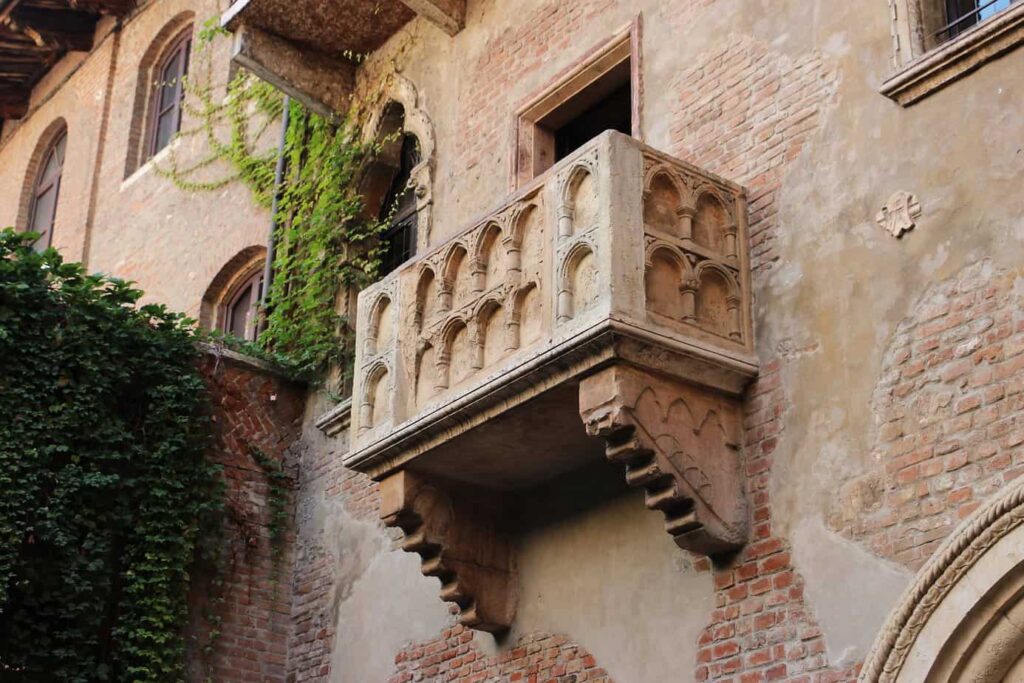
Yes, it’s cheesy, but everyone heads to Juliet’s House to see the famous balcony. The courtyard is usually packed with people snapping photos, but I’ll admit there’s something fun about leaning over the balcony and playing along with the story. When you’ve had your fill of romance, wander to Piazza delle Erbe. It’s the heart of the city, surrounded by painted buildings and a lively daily market.
Verona Arena
Verona’s Arena is like a baby Colosseum — smaller, but astonishingly well preserved. Built in the 1st century, it’s still used for summer opera performances. Sitting under the stars with Puccini or Verdi echoing through the amphitheatre has to be one of the most romantic things to do in Italy. Even if you don’t catch a show, stepping inside is worth it.
Bridges & Foodie Verona
The Ponte Pietra is Verona’s oldest bridge, rebuilt stone by stone after WWII. Walking across at sunset with the Adige River glittering below is a highlight. Food-wise, Verona leans hearty: try risotto all’Amarone (made with the local red wine) or pastissada de caval, a traditional slow-cooked horse meat stew for the adventurous.
Verona is compact, charming, and perfect for a romantic getaway.
➡️ Want more inspiration? Check out my guide to Romantic Places in Europe — Verona definitely earns its spot.
Pompeii & Herculaneum: Life Frozen in Time
Few places in Italy give you such a direct line to the past as Pompeii and Herculaneum. When Mount Vesuvius erupted in AD 79, these two towns were buried under ash and pumice, their streets, houses, and even people frozen in time. Walking through them today feels eerie, but also extraordinary.
Pompeii is the big name, sprawling and full of detail — from ancient bakeries and bathhouses to mosaics and villas. The plaster casts of victims are a sobering reminder of the human cost of the eruption. On my visit, I was struck by how ordinary life felt here: stepping stones in the roads, graffiti on the walls, even fast-food counters that looked oddly modern.
Herculaneum is smaller and better preserved, with vivid frescoes and wooden doors that survived the eruption. Because it’s less crowded, you get a clearer picture of what daily life was like — I found it more intimate and moving than Pompeii.
➡️ Book skip-the-line tickets or a guided tour — these sites are vast, and a guide helps bring them to life.
For history lovers, Pompeii and Herculaneum are two of the most fascinating things to do in Italy. Standing in their streets with Vesuvius looming in the background is an experience that lingers long after you leave.
➡️ Curious to know more? Don’t miss my full guide: Visiting Herculaneum: The Other Pompeii.

Bologna & Emilia-Romagna: Italy’s Foodie Heartland
If you love food (and let’s be honest, who doesn’t?), Bologna and the wider Emilia-Romagna region are non-negotiable stops on any Italy bucket list. I spent a few days here and basically ate my way through the city — no regrets.
Bologna
Bologna is the home of tagliatelle al ragù (the dish the rest of the world calls “spaghetti bolognese,” but don’t say that here). The portico-lined streets are beautiful, but it was the food that kept me glued to the city. Tortellini in brodo, mortadella sliced paper-thin, and gelato so good I went back twice in one day.
Emilia-Romagna Beyond Bologna
The region around Bologna is just as tempting. Parma is famous for its prosciutto and Parmesan cheese, Modena produces the world’s best balsamic vinegar, and Ferrara has its own unique pasta dishes. I joined a tasting tour and ended up hauling bottles of balsamic and wedges of Parmigiano back in my suitcase. Worth every kilo.
Emilia-Romagna doesn’t just feed you — it spoils you. For food lovers, it’s one of the most delicious things to do in Italy, and you’ll be planning your next meal before you’ve even finished the last bite.

Sardinia: Beaches and Ancient Mysteries
Sardinia is where Italy gets wild. The beaches look like they’ve been airbrushed — turquoise water, blindingly white sand, and cliffs that plunge straight into the sea. On the Costa Smeralda you’ll find yachts and champagne bars, but my favourite memories are from quieter southern coves where it felt like I’d stumbled onto my own private beach.
And then there are the nuraghi. These strange stone towers, scattered all over the island, are over 3,000 years old, and no one’s entirely sure what they were for.
Food here has its own distinct flavour too. Think crispy pane carasau, roasted suckling pig that melts in your mouth, and seadas — little pastries stuffed with cheese and drizzled in honey. Sweet, salty, and unforgettable.
Sardinia doesn’t try to be the Italy of postcards — it’s raw, bold, and completely addictive.

Hidden Gems in Italy: Beyond the Big Names
Italy’s big hitters steal the spotlight, but some of my most memorable trips have been to places that don’t make every guidebook cover. If you want to escape the crowds, these hidden gems are worth adding to your list.
Matera
Matera looks like something out of a fantasy film. Its ancient cave dwellings, known as the Sassi, tumble down the hillside, and wandering its narrow lanes feels like stepping into another century. At night, when the stone glows under soft lights, it’s pure magic.
Orvieto
Perched high on a volcanic cliff in Umbria, Orvieto is one of those towns that makes you gasp when you first see it. Its striped Gothic cathedral is jaw-dropping, and the underground tunnels (yes, the town has a secret underground world) are fascinating to explore.
Assisi
Known as the birthplace of St Francis, Assisi is spiritual but also stunningly pretty. The Basilica of St Francis is covered in frescoes, but I loved simply wandering the quiet stone streets with views across the Umbrian hills.
Ravenna
If you’re into mosaics, Ravenna will blow you away. The churches here hide glittering Byzantine mosaics that are some of the most beautiful in Europe. Step inside San Vitale and you’ll understand why UNESCO couldn’t resist.
These towns may not get the same fanfare as Rome or Venice, but they show off Italy’s quieter, more authentic side — and they’re all the better for it.

The Ultimate Italy Bucket List Map: Best Places to Visit in Italy
A custom Google Map showing all the top things to do in Italy — including cities, villages, coastlines, islands, and hidden gems.
How to use: This interactive map is colour coded — red for cities, blue for coast & islands, green for regions, purple for archaeological sites, and yellow for hidden gems. Zoom in, click the pins, and plan your Italian adventure.
FAQs About Visiting Italy
What is the best time to visit Italy?
Spring (April–June) and autumn (September–October) are the sweet spots. The weather is warm, the days are long, and the crowds aren’t at their summer peak. July and August can be sweltering and packed, especially in cities, while winter is quieter and great for exploring without the queues (and skiing in the Dolomites).
How many days do you need in Italy?
If it’s your first trip, aim for at least 10–14 days. That gives you time to see Rome, Florence, and Venice, plus a side trip to somewhere like the Amalfi Coast or Tuscany. Shorter breaks are possible — I’ve done amazing long weekends in Florence and Venice — but Italy really shines when you slow down.
What are the must see cities in Italy?
Rome, Florence, and Venice are the classic trio. Milan is fantastic if you love art and style, while Bologna is heaven for foodies. Beyond the big names, I’ve loved exploring Siena, Verona, and smaller gems like Orvieto and Matera — all give a very different slice of Italian life.
What food is Italy most famous for?
Pasta and pizza are the obvious stars, but each region has its own specialities. Rome has carbonara and cacio e pepe, Bologna is known for tagliatelle al ragù, and Naples gave us pizza. Down south, Sicily brings cannoli and arancini, while Tuscany is all about bistecca alla Fiorentina and Chianti wine. Eating your way around the country is half the fun.
How do you get around Italy?
Trains are the easiest way — they’re fast, frequent, and affordable if you book in advance. Driving makes sense in the countryside (Tuscany, Amalfi, Puglia), but parking and traffic in cities can be stressful. For islands like Sicily or Sardinia, flying or ferries are best.
What is the number one thing to do in Italy?
It’s hard to pick just one, but if I had to, I’d say walking through the Colosseum in Rome. Standing where gladiators once fought while modern Rome buzzes outside is spine-tingling. That said, Italy isn’t about a single “must do” — it’s about stringing together those unforgettable moments: watching the sunset in Venice, eating truffle pasta in Florence, or cruising along the Amalfi Coast. The best thing to do in Italy is to dive in and enjoy it all.
Wrapping Up: Your Italian Bucket List Awaits
Italy has a way of getting under your skin. One minute you’re throwing a coin into the Trevi Fountain, the next you’re sipping Chianti in a Tuscan vineyard or gazing out over the Amalfi Coast. I’ve been back more times than I can count, and there are still new corners I’m itching to explore.
This list covers the big hitters — and a few hidden gems — but the joy of Italy is that every piazza, every trattoria, and every winding backstreet has its own story. So use this as a starting point, but don’t be afraid to wander and make your own discoveries.
Keep Exploring Italy
Rome
- 🏨 Where to Stay in Rome – Find your perfect base in the Eternal City.
- 🍝 The Ultimate Food Lover’s Guide to Rome – 15 must-try dishes you can’t miss.
- 🏛 What to Do in Rome for First-Timers – Unforgettable experiences in the heart of history
- 🔗 See all my posts on Rome →
Naples
- 🍕15 Best things to do in Naples, Italy– Discover the city’s must-see sights, vibrant streets, and world-famous pizza spots.
Venice
- 🏨 Where to Stay in Venice – Area guide to the city’s most atmospheric neighbourhoods.
- ⛵ The Best Way to Spend a Day in Venice – The perfect 24-hour itinerary.
- 🔗 See all my posts on Venice →
More on Florence
- 🏨 Where to Stay in Florence – Area guide for art lovers, foodies, and wanderers.
- 🎨 25 Things to Do in Florence That Totally Live Up to the Hype– From masterpieces to markets and mouth-watering eats.
🔗 See all my posts on Florence →
Milan
- 🏙 18 Interesting Things to Do in Milan – 2025 update for the style capital of Italy.
More on Amalfi Coast
Sorrento & Positano
- 🌊 23 Epic Things to Do in Sorrento – Coastal charm, day trips, and lemon groves.
- 🌅 Iconic Things to do in Positano: The Ultimate Guide to Italy’s Amalfi Coast Gem– From beach lounging to boat trips.
🔗 See all my posts on the Amalfi Coast →
- Hungry for more? Dive into my foodie guides — from Bologna’s pasta to Amalfi’s lemons.
- Other Destinations – Planning beyond Italy? Explore my guides to France, Spain, and more European gems.
- More on Italy- Still in the Italy mood? Check out my bucket list, hotel picks, and hidden gem itineraries.
Need a reminder? Pin it!


