

Florence vs Rome: Which City Should You Visit on Your Italy Trip?
Florence vs Rome is one of those classic Italy dilemmas. One is all Renaissance rooftops, compact streets, and long lazy lunches; the other hits you with ancient ruins, neighbourhood chaos, and the kind of energy that keeps you out far later than planned. I’ve been back to both several times, and every visit has convinced me they’re impossible to compare in a neat, one-size-fits-all way.
If you’re trying to choose between them for your next Italy itinerary, it helps to know what each city actually does best. This guide breaks things down simply — food, walkability, costs, day trips, the overall vibe — so you can pick the city that matches your style.
This article may contain affiliate links. If you book through them, I may earn a small commission at no extra cost to you.
You’ll find this guide linked from my Italy Travel Guides, which pulls together the places, food, and planning tips that make travelling in Italy easier.


Quick Answer: Florence or Rome?
If you only have time for one city, choose Florence for art, food, and a slower, walkable pace. Pick Rome for ancient history, big landmarks, and a livelier, more chaotic energy. Both are fantastic, but they offer completely different experiences.
Go for Florence if you love markets, wine bars, and exploring a historic centre that feels easy to navigate. Choose Rome if you want grand sights, neighbourhood variety, and days filled with ruins, plazas, and late-night trattorias.
And if you’re still undecided, good news — the fast train between them means you can comfortably visit both on the same trip.

Florence vs Rome: Key Differences at a Glance
If you’re trying to decide between Florence and Rome, this quick overview makes it much easier to compare the main differences side by side. From walkability and food to day trips and overall vibe, here’s how the two cities stack up at a glance.
| Category | Florence | Rome |
|---|---|---|
| Overall vibe | Artistic, compact, relaxed | Energetic, historic, full of neighbourhood variety |
| Best for | Art lovers, foodies, couples, first-timers who prefer a slower pace | History buffs, busy itineraries, nightlife, big landmark seekers |
| Walkability | Very walkable; the historic centre is small | Walkable in parts but more spread out |
| Top highlights | Duomo, Uffizi, Ponte Vecchio, Accademia | Colosseum, Vatican, Trevi Fountain, Pantheon |
| Food scene | Wine bars, markets, traditional Tuscan dishes | Pasta classics, street food, trattorias everywhere |
| Costs | Mid-range hotels and meals generally cheaper | Big sights and central hotels push costs up |
| Best for day trips | Siena, Lucca, Chianti, Bologna, San Gimignano | Tivoli, Frascati, Orvieto, Castel Gandolfo |
| Recommended stay | 2–4 days | 3–5 days |
| Good to combine? | Yes — easy by fast train | Yes — quick connection to Florence |
Which City Is Better for First-Time Visitors?
If it’s your first time in Italy, both cities are incredible, but they give you very different kinds of days.
Florence feels instantly manageable. The historic centre is compact, the main sights are close together, and you can walk almost everywhere without thinking too hard about transport. It’s ideal if you enjoy relaxed exploring, a couple of standout museums, and evenings in cosy wine bars or neighbourhood trattorias.
Rome delivers a bigger first-timer punch. The sights are dramatic, the neighbourhoods change from one street to the next, and the whole place has that lively, slightly chaotic energy that keeps things interesting. It’s perfect if you want ancient history, full days out, and plenty of food stops along the way. The city is more spread out but packed with unforgettable moments.
The simple version: choose Florence for a calm, easy-to-navigate introduction to Italy, and choose Rome if you’re after something busier, grander, and full of big-ticket sights.

Things to Do: Florence vs Rome
Florence
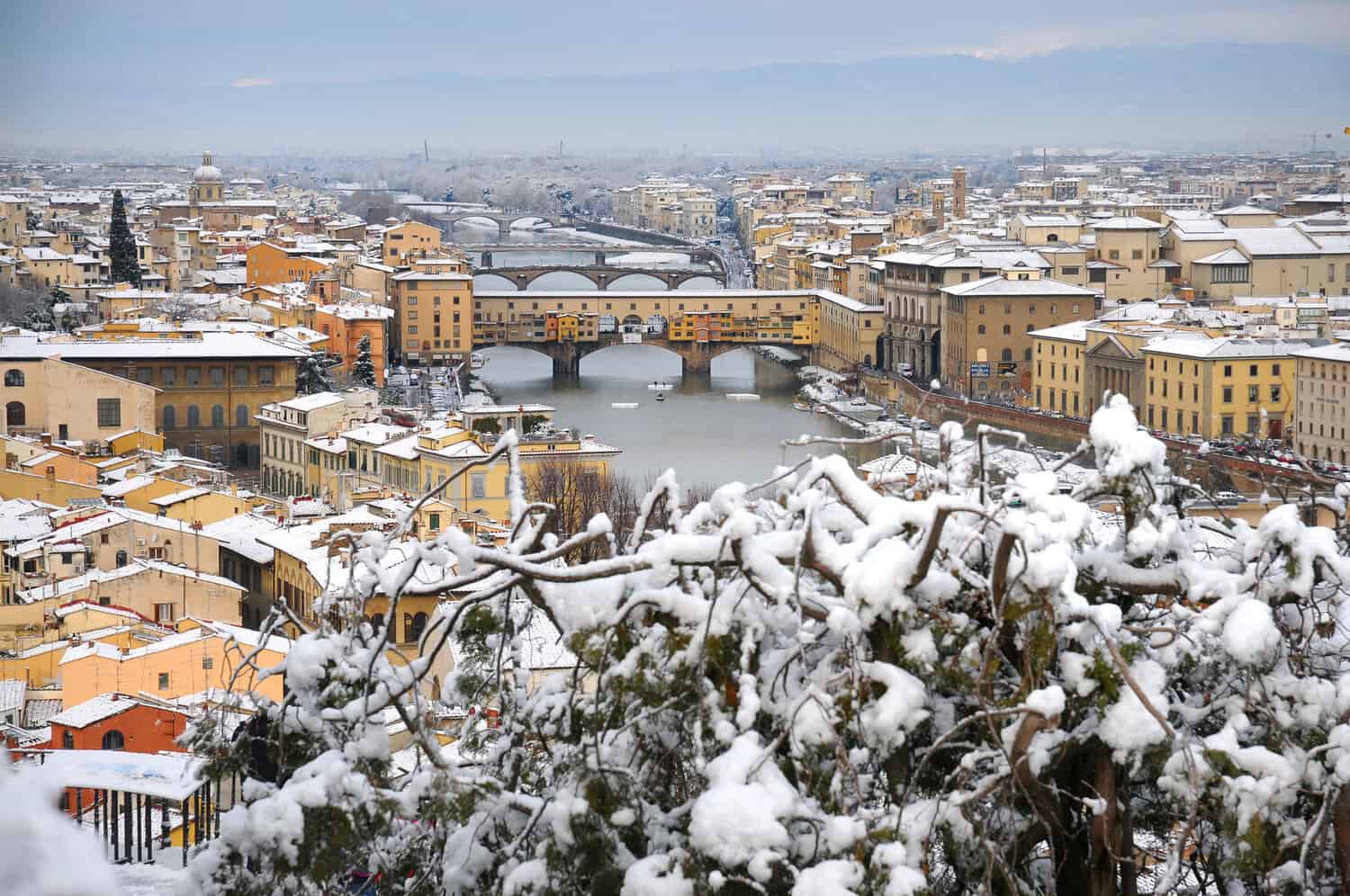
Florence is all about art, architecture, and soaking up the city at a comfortable pace. The big hitters are the Duomo, the Uffizi, and the Accademia, but some of the best parts of the city are the smaller moments — browsing the stalls at Sant’Ambrogio, wandering across the Ponte Vecchio early in the morning, or climbing up to Piazzale Michelangelo for those postcard views. The compact centre means you can fit a lot into a day without rushing.
🌿 Planning the Rest of Your Florence Trip
Florence is compact, intense, and easy to love — but once you’ve chosen your base and planned a few essentials, the city becomes much easier to move through.
Related Guides
Florence Essentials
- 25 Things to Do in Florence — Sights, food, views, and the classics done well.
- Where to Stay in Florence — Best areas and hotels for every type of trip.
- How Many Days in Florence – The honest answer.
- Best Time to Visit Florence – Weather, crowds, and when the city feels its best.
- Florence Travel Guide — A first‑timer’s overview: what to expect, how to plan, what to prioritise.
Food & Wine
- What to Eat in Florence — A food‑lover’s guide to local dishes.
- Best Food Tours in Florence — How to choose the right one.
- Winery Tours from Florence — Tuscan and Chianti experiences worth the trip.
Where to Stay
- Where to Stay in Florence — Choose the right base, not just a hotel.
- Boutique hotels in Florence — Stylish, unique places to stay.
Day Trips & Budget
- Day Trips from Florence — Wine, coastlines and Tuscan countryside.
- Free Things to Do in Florence — Big experiences, zero euros.
Art Lovers
- What to See at the Uffizi Gallery — A clear, focused guide to Florence’s art gem.
- More on Florence – Browse all Florence guides.
Looking beyond Florence?
- Tuscany – Hill towns, vineyards, coastlines, and slow‑travel favourites.
- More Destinations – Browse all city guides and travel inspiration.
.
Rome
Rome comes with a much bigger list of headline sights. The Colosseum, Vatican Museums, Trevi Fountain, and Pantheon, and you can easily spend full days exploring neighbourhoods like Trastevere, Monti, or the historic centre. There’s more walking, more variety, and more spontaneous “wow” moments simply because the city is larger and packed with ancient monuments everywhere you turn.
Both cities have fantastic food, brilliant markets, and plenty of ways to fill your days — it just depends if you prefer Florence’s slower pace or Rome’s high-energy atmosphere.
Quick Rome Travel Picks
💡 Planning a trip? Start here for the best tours, tickets, and stays in Rome.
➡️ Best Tours in Rome – Unforgettable Experiences: What to Do in Rome for First Timers
➡️ Best Hotels – Where to Stay in Rome: Best Areas & Hotels
➡️ Best Foodie Tours – Best Rome Food Tours: Eat Like a Local
➡️ Best Free Things – Over 30 Free Things to Do in Rome (Tried & Tested)
➡️ Best Day Trips – The Best Day Trips from Rome
➡️ Getting Around – Book Your Rome Car Hire with Booking.com
Food: Florence vs Rome
Florence is all about Tuscan comfort food. Expect big bowls of fresh pasta, rich meat sauces, crispy schiacciata sandwiches, and plenty of wine bars tucked into tiny streets. It’s a great city for long lunches, market browsing, and relaxed evenings where you order “just one more” glass of Chianti. The Mercato Centrale and Sant’Ambrogio are easy places to graze your way through local flavours, and you’ll never be far from a cosy trattoria.

Rome’s food scene has a completely different personality. The classics are everywhere — carbonara, cacio e pepe, amatriciana, supplì, and crispy Roman-style pizza — and the city is full of busy trattorias, street food spots, and late-night dining. It’s bolder, louder, and a little more chaotic in the best possible way. If you enjoy big flavours and informal spots where the menu is handwritten and the portions are generous, Rome is your city.

Both cities’ food is delicious, but the experience is totally different. Florence is for slower meals and Tuscan staples; Rome is for iconic pasta dishes, quick bites between sights, and the occasional food coma. Food tours are a great way to explore the city. I have a quick guide to some of the best food tours in Rome with hidden places and local favourites.
If you’re planning to eat your way through the city, my What to Eat in Rome guide has all the essentials in one place.
Which City Is Cheaper?
Costs can vary a lot depending on when you visit, but in general, Florence comes out slightly cheaper than Rome. Hotels, meals, and museum tickets tend to be a bit friendlier on the budget, especially if you’re staying just outside the very centre. It’s also a city where you naturally walk almost everywhere, so you won’t spend much on transport. If you want a quick breakdown of the best areas and hotels, my Where to Stay in Florence guide has a simple overview.
Rome is a very different story. The city is much larger, the neighbourhoods all have their own personalities, and where you stay can really shape your trip. Monti is great for first-time visitors, Trastevere is perfect for long evenings out, and Prati works well if you want to be close to the Vatican. If you’re weighing up the options, my Where to Stay in Rome guide runs through the best areas and hotels without making it complicated.
The short version: Florence feels easier on the wallet day-to-day, while Rome gives you more choice but usually at a slightly higher price point.

Walkability: Is Florence More Walkable Than Rome?
Florence is one of the most walkable cities in Italy. The historic centre is small, the main sights sit close together, and wandering between neighbourhoods feels effortless. You can go from the Duomo to the Uffizi to the river in minutes, and most days you won’t need public transport at all. Even the slightly uphill walks — like the climb to Piazzale Michelangelo — are manageable and worth it for the views.
Rome is walkable too, but in a completely different way. The city is much larger, the landmarks are more spread out, and it’s easy to clock up a lot of steps without realising it. Some areas are perfect for exploring on foot, like the historic centre, Trastevere, and Monti, while others are better reached by metro or bus. You can still walk a lot in Rome, but expect longer distances and more variation from one part of the city to the next.
If walkability matters to you, Florence wins easily. Rome offers more variety and more to see, but you’ll be using public transport far more often.

Art & History: Florence vs Rome
Florence is the heart of the Renaissance, and you feel it everywhere. The Uffizi and Accademia hold some of the most famous artworks in the world, but even simple things like walking across Piazza della Signoria or stepping inside a small church can feel like stepping into a textbook. The city is compact, so the art feels concentrated — you can fit in major masterpieces without rushing from one side of the city to the other. It’s great if you enjoy museums, galleries, sculpture, and those quieter moments where you suddenly notice a beautiful fresco above a doorway.
Rome’s history is on a completely different scale. The Colosseum, Roman Forum, and Pantheon are just the start — there are ancient ruins, Renaissance palaces, Baroque fountains, and layers of history packed into almost every street. It’s less curated than Florence but far more dramatic, and you often stumble across sites without even planning to. If you love ancient history, grand architecture, or simply the feeling of being surrounded by thousands of years of stories, Rome wins by a mile.
Florence is unbeatable for Renaissance art; Rome is unmatched for ancient history and sheer variety. Both are amazing — it just depends which kind of culture you prefer.
Useful Tickets for the Main Sights
- Colosseum, Roman Forum & Palatine Hill – timed-entry ticket
- Vatican Museums – skip-the-line access (early entry recommended)
- Uffizi Gallery – timed entry to avoid long queues
- Accademia Gallery (David) – essential ticket during peak season
- Duomo Complex Florence – dome climb + cathedral museum entry

Day Trips: Florence vs Rome
Florence has some of the best day trips in Italy, especially if you enjoy food, wine, and small historic towns. Siena, Lucca, Pisa, and San Gimignano are all easy to reach by train or bus, and Chianti is perfect for wine tastings and countryside views. Bologna is another great option and only around 40 minutes away by high-speed train. Most day trips from Florence feel calm and scenic, with plenty of medieval streets, vineyards, and relaxed lunches.
Rome’s day trips have a completely different feel. The big hitters are Tivoli with Villa d’Este and Hadrian’s Villa, the hill town of Orvieto, the lakeside town of Castel Gandolfo, and the wine region of Frascati. If you’re up for a long day, Naples is also possible by fast train. Rome’s day trips tend to mix history, archaeology, and dramatic scenery rather than wine country and hill towns.
Both cities have fantastic options, but Florence is better if you want classic Tuscany landscapes and easy train trips, while Rome works well for ancient sites, villas, and grand gardens.

How Far Apart Are Florence and Rome?
Florence and Rome look far apart on a map, but the distance between them is surprisingly manageable. The two cities are roughly 275 km (about 170 miles) from each other, and the route is one of the easiest in Italy. High-speed trains connect the two in as little as 1 hour 30 minutes, making it simple to visit both on the same trip without losing much time to travel.
If you drive, the journey usually takes around three hours, depending on traffic, and the route is straightforward. Buses also run between the cities, but they take longer and are best if you’re travelling on a tight budget.
In short, Florence and Rome are close enough that combining them feels natural — especially if you build your trip around the high-speed train.

How to Travel Between Florence and Rome
Getting between Florence and Rome is incredibly straightforward, and you’ve got a few good options depending on your budget and travel style.
By high-speed train
The fastest and easiest way to travel. Trenitalia and Italo trains run throughout the day, taking around 1 hour 30 minutes from city centre to city centre. Trains are comfortable, reliable, and usually the best value if you book a little in advance.
By bus
The cheapest way to travel, but also the slowest. Buses can take 3.5 to 4.5 hours depending on the route and traffic. It’s a good budget option, though most travellers prefer the speed and comfort of the train.
Which option is best?
For most people, the high-speed train is the clear winner. It’s quick, comfortable, and gets you straight into the heart of each city without the stress of driving or parking.
By car
Driving between the two cities takes around three hours. It’s a simple route on the A1 motorway, but keep in mind that both Florence and Rome have ZTL zones (restricted areas), so you’ll need to park outside the historic centres. This option works best if you’re continuing into Tuscany or the countryside afterwards.
Need a rental car? Tap the banner to compare prices and find the best deal.

Which City Should You Visit First?
If you’re visiting both cities on the same trip, the order really comes down to personal preference.
Beginning in Florence keeps things simple. The compact centre means you can ease into your trip without navigating busy streets or long travel distances. It’s great if you like the idea of settling in quickly, exploring at a comfortable pace, and ticking off a few big sights without rushing around.
Starting in Rome throws you straight into the action. The city is larger, livelier, and full of major landmarks, so your days naturally feel busier. It’s an exciting way to kick things off, especially if you want that “I’m in Italy” feeling right from the start. Florence then becomes a nice change of pace later in the itinerary.
There’s no right or wrong order — it just depends on whether you want your trip to start calm or full of energy.

Weather: Florence vs Rome
Both cities have similar weather patterns, but they can feel quite different throughout the year.
Summer is hot in both places, but Rome tends to feel warmer because the city is larger and you’re often out in the sun walking between landmarks. Florence can also get very hot, especially in July and August, but distances are shorter and you can dip into museums or cafés more easily.
Spring and autumn are ideal for both cities. Florence feels especially lovely in April, May, September, and October — warm days, cooler evenings, and great light for sightseeing. Rome is comfortable too, with plenty of outdoor dining and long, pleasant evenings.
Winter is mild compared to many parts of Europe. Florence is quieter and cosy, while Rome stays lively with plenty of indoor sights, good food, and fewer queues at major landmarks. Rain is more common in both cities from November to February, but it rarely lasts all day.
If you’re choosing purely based on weather, both are at their best in late spring and early autumn.
Final Verdict
Florence and Rome are two completely different city experiences, which is why choosing between them feels so tricky. Florence is calm, compact, and ideal if you want art, good food, and days that don’t involve too much rushing around. Rome is bigger and busier, with blockbuster sights and a lively energy that stays with you long after you’ve left.
If you’re short on time, Florence works well for an easy, walkable trip. If you want history, variety, and big landmark moments, Rome is the one. And if you can fit both into your itinerary, the fast train makes it easier than you might expect.
FAQs about Florence vs Rome
How far is Florence from Rome?
They’re about 275 km (170 miles) apart. The fast train covers the distance in around 1 hour 30 minutes, which makes visiting both cities very easy.
Is Florence or Rome better?
It depends on the kind of trip you want. Florence is great for art, food, and relaxed exploring, while Rome is better for ancient history, big sights, and lively neighbourhoods.
Is Florence cheaper than Rome?
Generally yes. Hotels, meals, and museum tickets in Florence tend to cost a little less than in Rome, although both cities get more expensive in peak season.
Is Florence walkable?
Very. Most of the main sights are close together, and you can explore almost the entire centre on foot. Rome is walkable too, but distances are much longer.
How many days do you need in Florence?
Two to three days is enough for the main highlights, with four or more giving you time for day trips or longer museum visits.
How many days do you need in Rome?
Three to five days works well. There’s a lot to see, and spacing things out makes the trip far more enjoyable.
Can you visit both Florence and Rome in one trip?
Absolutely. The high-speed train takes about 1 hour 30 minutes, making it very easy to include both.
Which city has better food?
Both cities have divine food. Florence is all about Tuscan dishes, markets, and wine bars. Rome is famous for pasta classics, street food, and lively trattorias.
What is the best way to travel from Florence to Rome?
The high-speed train is the quickest and most convenient option, with frequent departures and a journey time of around 1 hour 30 minutes.
🌿Explore Italy
Fallen for Italy? Places worth the flight — and every plate of pasta.— from art-filled cities to sun-soaked coastlines.
- Venice – Canals, historic neighbourhoods, and a city best explored on foot.
- Amalfi Coast – Colourful villages, cliffside views, and limoncello sunsets.
- Rome – Ancient ruins, hidden trattorias, and unforgettable gelato.
- Tuscany – Vineyards, hill towns, and golden countryside drives.
- Florence – Renaissance art, rooftop views, and perfect pasta.
- Naples – Ancient streets, world-famous pizza, and vibrant local life.
- Bologna – Italy’s food capital — mortadella, tagliatelle, and endless flavour.
🌿 Travelling beyond Italy
Looking for inspiration beyond Italy? Browse more destinations and food-focused guides from across the blog.
- Destination Guides – Cities, regions, and trip ideas across Europe and beyond.
- Food & Drink – What to eat, local specialities, and market-led guides.


